
Last updated November 20, 2026
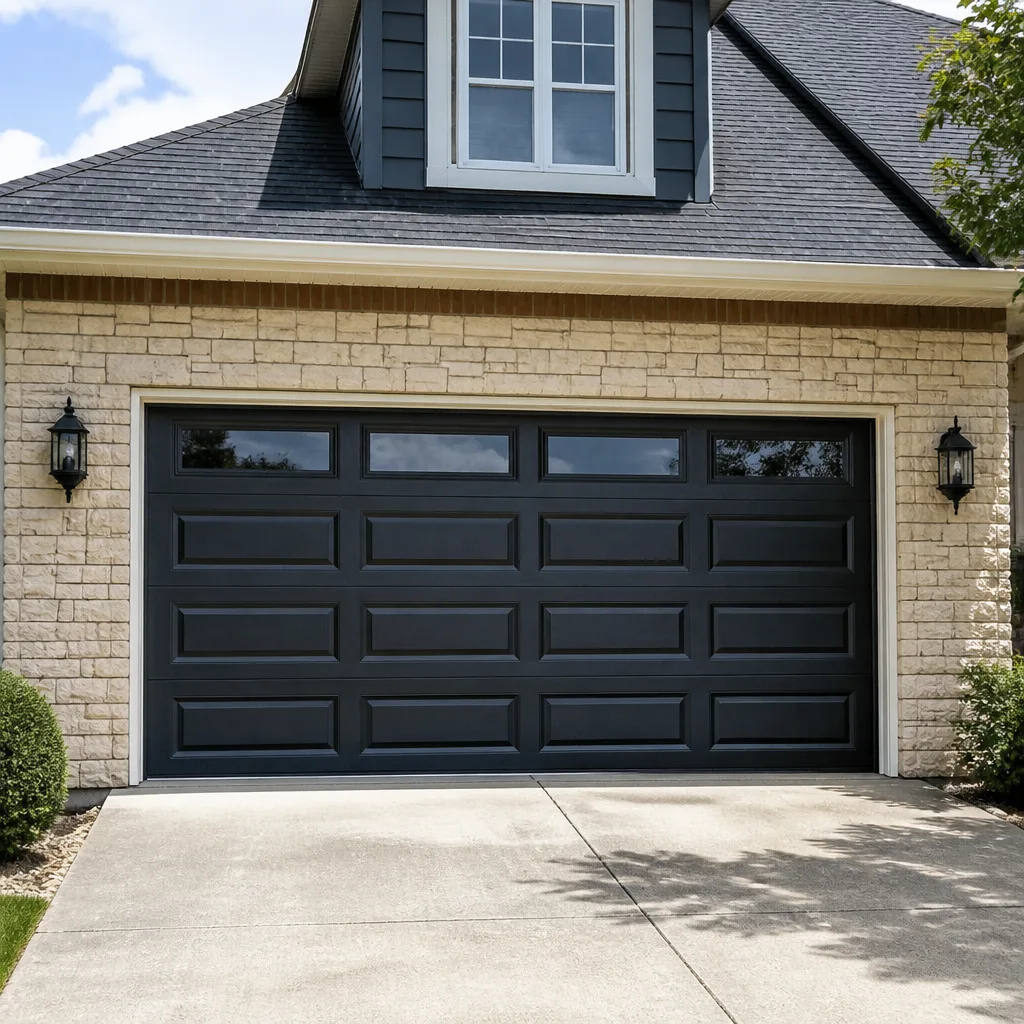 Raised-panel steel
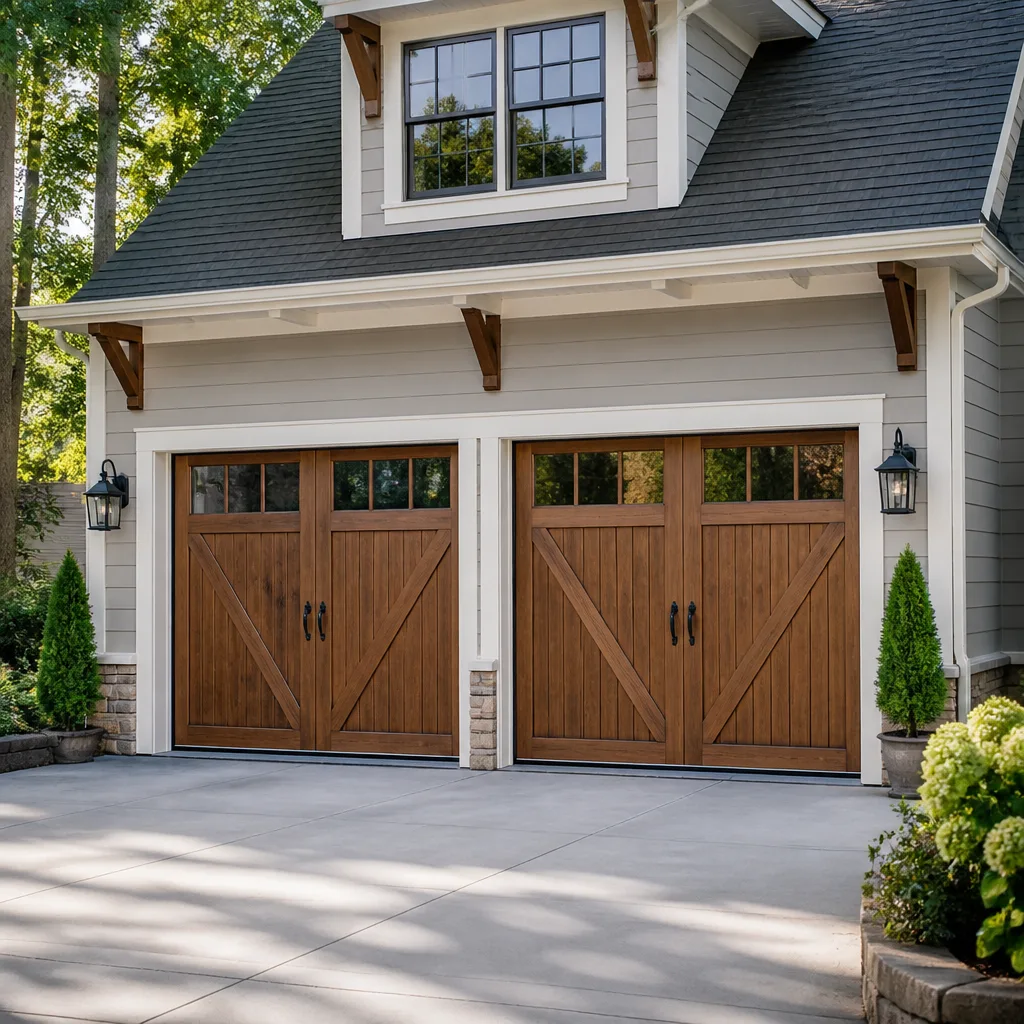 Carriage house
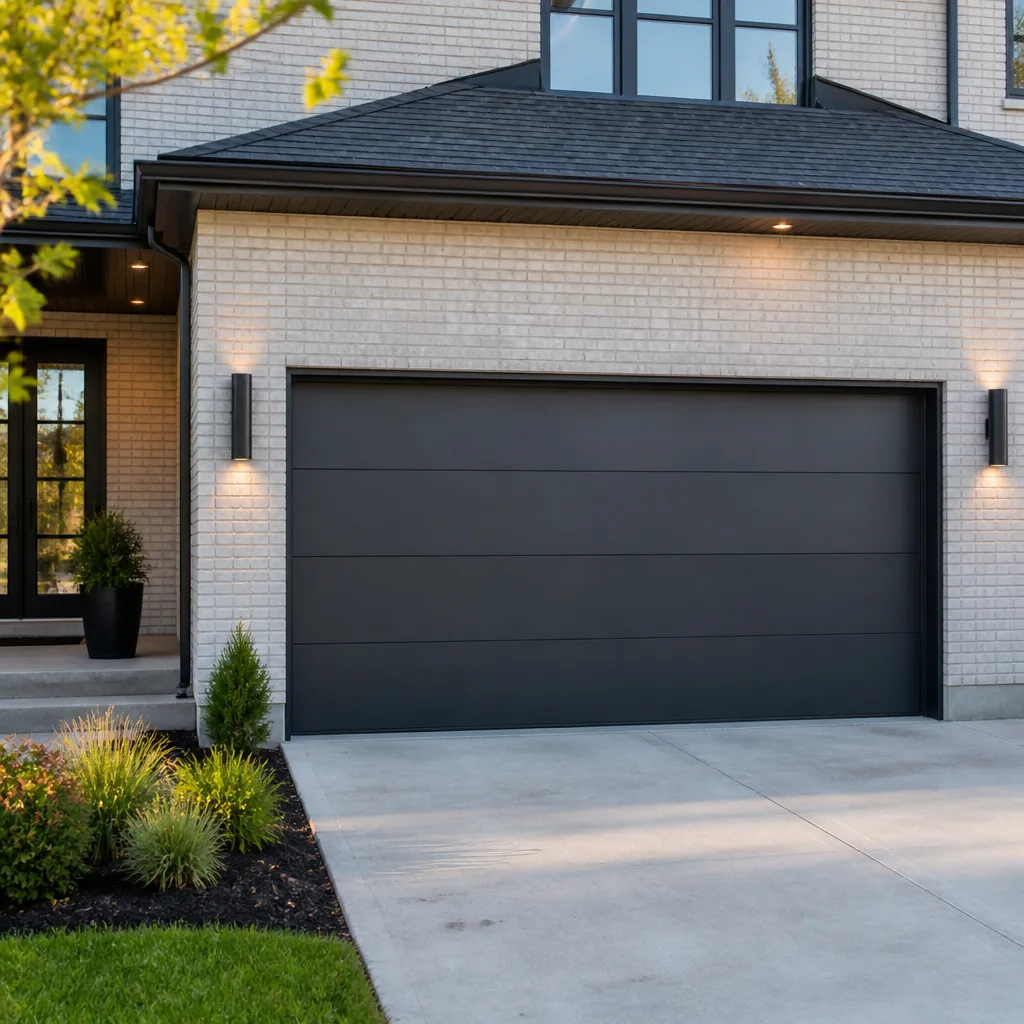 Modern flush
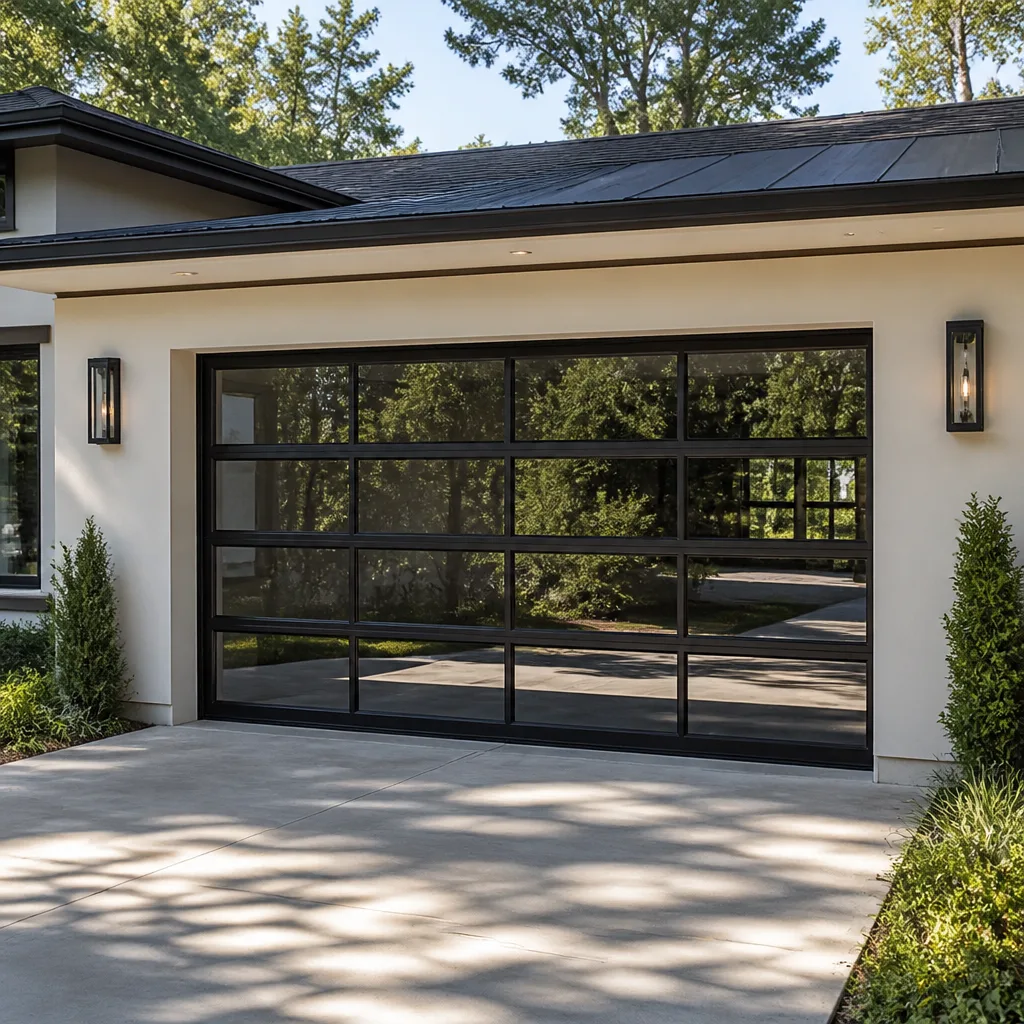 Full-view glass
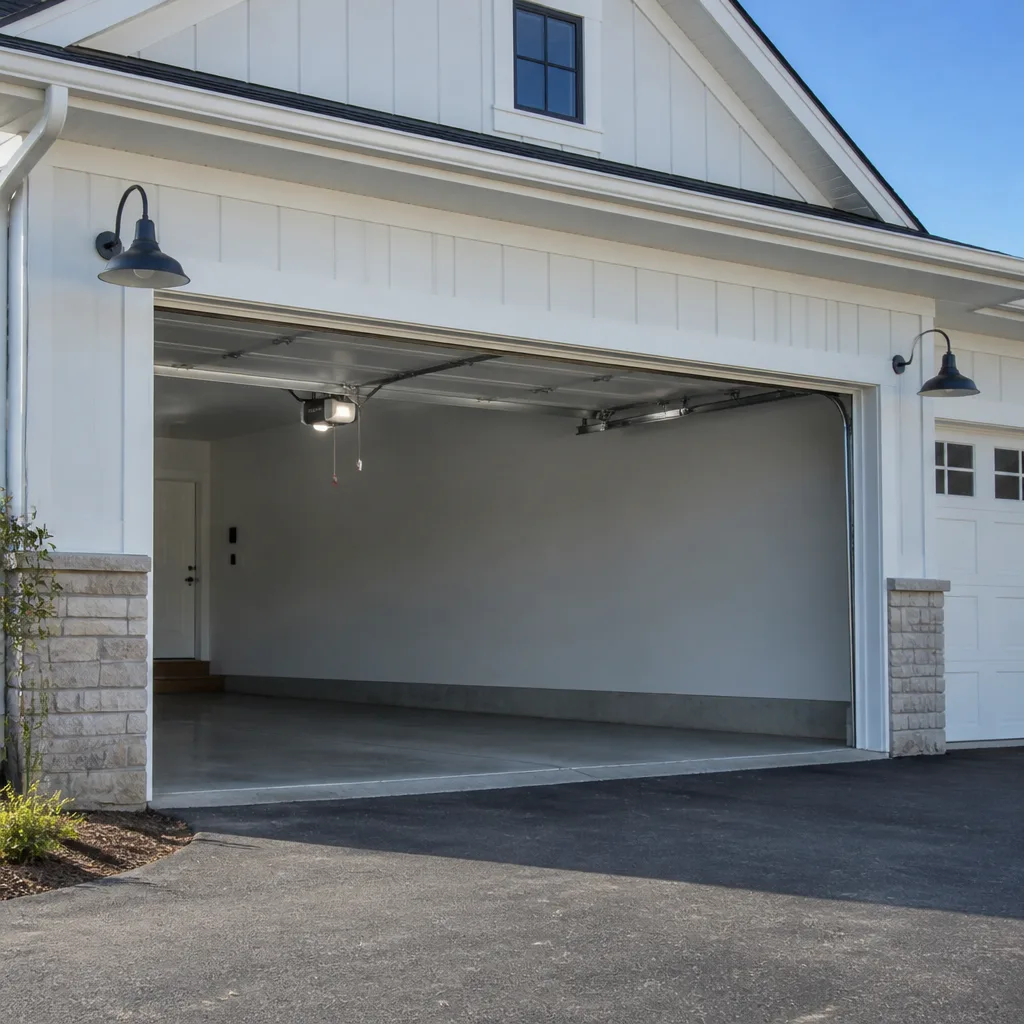 LiftMaster openers
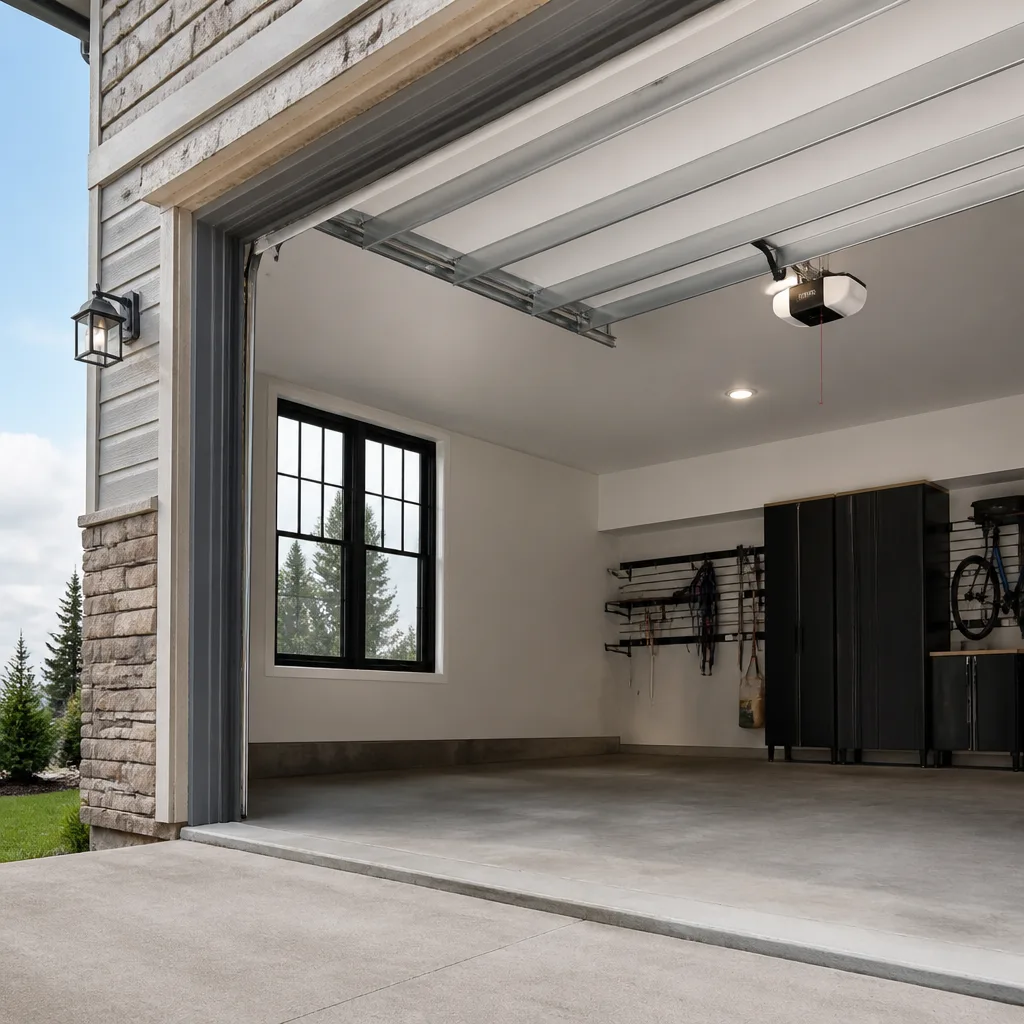 Chamberlain openers
Full 25-point door and opener safety check with every visit - springs, cables, rollers, tracks, and your LiftMaster or Chamberlain opener included
You get a price before we start. It does not change when the pro arrives.
Get your free estimateThe Complete Guide to Garage Doors in Paterson
A garage door that performs flawlessly in dry, sunny country can pit, warp, and bind on a Paterson street in a handful of winters. That surprises people. Most homeowners shop for a door or an opener the way they’d shop for an appliance, comparing features on a showroom floor while ignoring the conditions the equipment will actually live in. In Paterson, those conditions are specific: dense blocks of century-old housing stock, tight alley access, and a humid river-basin climate that cycles through hard freezes and wet thaws all winter. This guide maps every real decision – material, opener, insulation, brand, and repair strategy – to the environment your door actually faces. You’ll learn what holds up here, what fails early, and how to tell a complete repair from a quick patch.
Quick Answer
A garage door in Paterson needs to be chosen for freeze-thaw cycling, humid summers, and tight urban lot access, not for a generic suburban template. That means a steel or insulated steel door with a proper factory finish, a weatherseal that actually seals at the bottom and sides, and an opener sized to the door’s real weight. Most door failures in this city trace back to springs, opener logic boards, and weatherseal at the thresholds rather than to the panels themselves.
Styles & brands we work with
- Raised-panel steel
- Carriage house
- Modern flush
- Full-view glass
- LiftMaster openers
- Chamberlain openers
Table of Contents
- Why Paterson Conditions Shape Every Garage Door Decision
- Which Door Materials Hold Up in Passaic County Winters
- Density, Alleys, and Clearance: What Urban Lots Require
- Insulation and the Attached-Garage Problem in Older Homes
- How the Big Brands Differ, and Why It Matters for Repair
- Specialist Quote vs. Big-Box Installer: What Gets Left Out
- What “Complete” Really Means: The Five-Part System
- How a Technician Actually Diagnoses a Door Problem
Why Paterson Conditions Shape Every Garage Door Decision
Paterson sits in the Passaic River basin, and that geography controls the weather your door experiences. Winters here swing between wet, heavy snow and rapid thaws, then back to hard freezes. That’s freeze-thaw cycling, and it’s the single biggest driver of early garage door failure in this city. Water gets into gaps, seams, and weatherseal, freezes, expands, and forces the material apart. Repeat that cycle dozens of times a winter and you get pitting on exposed steel, splitting on wood-look panels, and stiff, cracked seals that no longer touch the floor.
Humidity matters too. Passaic River basin summers are genuinely humid, and a poorly finished door traps moisture against its own surface. Condensation forms on the inside face of cold steel, especially in an attached garage that shares a wall with the house. Over a few seasons, that’s rust from the inside out.
Then there’s the housing stock. Large parts of Paterson – the dense blocks around the downtown core, the older residential streets off Market Street, and the multi-family properties that dominate much of the city – were built when garages were smaller, ceilings were lower, and alley access defined how a car got to the door at all. A generic suburban door spec often doesn’t fit these openings.
Put simply, local conditions are a spec requirement, not an afterthought. When we look at a door in Paterson, we’re reading three things at once: the climate exposure, the age and construction of the structure, and the access route to the opening. Get those right and the door will last. Ignore them and you’ll be replacing components years before you should.
Which Door Materials Hold Up in Passaic County Winters
Steel is the workhorse for Paterson garages, and for good reason. It handles freeze-thaw cycling without the warping and splitting that plague wood and wood-composite doors. The catch is the finish. A properly factory-primed and painted steel door resists the moisture that a site-painted door can’t. Look for a baked-on factory finish and inspect the bottom edge, where water pools and rust starts first.
Insulated steel is the sweet spot for attached garages, which is most of Paterson. You get steel’s durability plus a foam core that slows heat transfer between the garage and the house. That matters more here than in a mild climate, because you’re fighting both summer humidity and winter cold.
Wood doors look great on older Paterson homes, but they demand real maintenance. In this climate a wood door needs repainting or resealing on a tight schedule, or the freeze-thaw cycle will find every seam. If you have one and love it, keep up with the finish; if you’re choosing new, go in knowing the upkeep.
Aluminum and aluminum-glass doors suit modern builds but dent and can transfer cold quickly unless they’re thermally broken. They’re a fit for specific houses, not a universal answer.
- Steel (single-layer): Affordable, durable, best for detached or unheated garages. Watch the bottom edges for rust.
- Insulated steel: The best all-around pick for attached Paterson garages. Resists freeze-thaw and slows heat transfer.
- Wood: Beautiful on historic homes, but needs ongoing finish work to survive wet winters.
- Aluminum/glass: Good for modern facades, but dents easily and needs thermal breaks to perform.
One practical note: door width and height in Paterson’s older alleys and tight lots can be non-standard. A material that’s right in theory still has to fit the opening you actually have. Measure before you fall in love with a style.
Density, Alleys, and Clearance: What Urban Lots Require
Paterson’s urban density changes the garage door math in ways a suburban guide never mentions. On a tight lot with alley access, the door isn’t just an entry – it’s the only way a car enters and exits, and there may be very little room to maneuver. That affects the door’s width, its track configuration, and how far it has to travel before it clears the vehicle.
Here’s what actually matters on these lots:
- Measure the clear opening, not the nominal size. Older Paterson garages were built to whatever the framing allowed. A “standard” 8-foot or 9-foot door may not fit; the real opening often dictates a custom width.
- Check headroom above the door. Low ceilings in older structures limit how a door can open. A standard torsion setup needs vertical clearance a low-clearance or low-headroom configuration can work around.
- Confirm track and swing clearance. The door has to travel back into the garage without fouling a wall, a beam, or a car parked too close.
- Account for the apron and approach. In dense blocks the driveway apron may be short or sloped, which affects how the bottom seal meets the floor and how the opener’s safety sensors see the threshold.
Multi-family and mixed-use properties add another layer. A landlord may have several garage openings on one property, each with different dimensions and different use patterns, from daily resident parking to infrequent storage access. Getting them all working on a consistent, correctly sized basis is part of what a specialist does.
This is where generic installation templates fail. An installer working from a standard spec sheet will order a standard door. On a tight Paterson lot, that’s how you end up with a door that fits badly, seals poorly, or binds on its tracks from day one.
Insulation and the Attached-Garage Problem in Older Homes
Most Paterson garages are attached, and many are attached to homes built long before insulation was standard practice. That combination creates a specific problem: the garage becomes a weak point in the building envelope, and the door is the largest single opening in it.
Insulation is measured by R-value, which describes resistance to heat flow. Higher R-value means better insulation. The brands that dominate Paterson installs differ meaningfully here. A builder-grade single-layer steel door has essentially no R-value, while an insulated door with a foam core can carry a much higher rating. That difference shows up as a colder, damper garage in winter and a hotter one in summer when the door is thin.
Why it matters beyond comfort: a well-insulated door helps keep moisture from condensing on the inside face of the door, which is a leading cause of interior rust in a humid climate. It also reduces the temperature swings that stress weatherseal and cause it to harden and crack prematurely. In an older Paterson home with an attached garage that shares a heated wall, the door is the difference between a garage that stays usable and one that turns into a damp, cold room half the year.
When you compare quotes, ask specifically about the R-value and construction of the door being proposed, not just its material and color. Two steel doors that look identical can differ enormously in how they perform in an attached garage in this climate. That comparison is where a knowledgeable seller earns their keep.
How the Big Brands Differ, and Why It Matters for Repair
Most residential garage doors in Paterson come from a small set of manufacturers, and most openers from another. Knowing which brand is already in your garage tells a technician a lot before the first bolt is turned. We work on the eight brands that dominate local installs – LiftMaster, Chamberlain, Genie, Clopay, Amarr, Wayne Dalton, Craftsman, and Raynor – and each has its own habits.
On the opener side, LiftMaster and Chamberlain share a lot of engineering lineage, which means common failure patterns and parts. Genie has its own logic and rail designs. Craftsman units, many of them older, have their own vintage of safety-reversing logic and limits that a generalist may not recognize. On the door side, Clopay and Amarr lean heavily on insulated steel in the models most Paterson homeowners end up with, while Wayne Dalton and Raynor have their own panel, track, and spring configurations.
Why this matters: fast diagnosis comes from familiarity, not from trial and error. When a technician already knows how a given LiftMaster opener reports a force-limit trip, or how a Wayne Dalton door’s spring setup differs from a Clopay, they skip the guesswork. That’s less time on your ladder, fewer parts swapped “just in case,” and a repair aimed at the actual failure.
It also shapes honest recommendations. A brand-agnostic approach means the answer is driven by what your specific system needs. If a Craftsman opener needs a logic board and the door springs are fine, that’s the repair. If the opener is healthy and the problem is a stretched spring, we say so. The recommendation follows the equipment, not a preferred vendor or a push toward replacement.
When you’re comparing providers, ask whether they recognize your brand and can describe how it typically fails. The answer tells you whether you’re talking to a specialist or to someone reading a manual for the first time.
Specialist Quote vs. Big-Box Installer: What Gets Left Out
A big-box installer defaults to selling a door, because that’s what the store’s business model rewards. A specialist starts from your opening, your climate, and your existing equipment. That difference shows up in the details of the quote, and the details are where the money actually goes.
Here’s what tends to get left out of a generic installation quote:
- Weatherseal on all four sides. Bottom seal, side jambs, and the top stop all matter in a wet, freeze-thaw climate. A cheap bottom seal alone won’t keep water and cold out.
- Correct spring sizing for the finished door weight. Springs must match the door. An undersized spring fails early and dangerously.
- Headroom and track configuration that match your actual structure. A standard track kit forced into a low-air older garage is a recipe for binding.
- Opener compatibility and force-limit setup. The opener must be matched to the door and its safety reverse checked properly.
- Reusing vs. replacing existing tracks and hardware. A specialist will tell you what’s still serviceable instead of defaulting to all-new.
The other big difference is the recommendation itself. A specialist says fix first and replace only when necessary, because that’s usually the honest answer. Repairs to springs, openers, tracks, and weatherseal solve most problems in Paterson garages. A door that’s structurally sound doesn’t need replacing just because a spring broke or an opener quit.
That isn’t a knock on buying a new door when you genuinely need one. It’s about not being sold one you don’t. The specialist quote starts with your existing system, tells you what’s wrong, and prices the repair honestly. If a replacement is truly the better path, a specialist will say so and explain why.
What “Complete” Really Means: The Five-Part System
A garage door isn’t a door plus some parts. It’s a system, and five components have to work together. Miss one and the others fail faster.
- Door panels and frame. The structural envelope. Panels need to be sound and the frame plumb and square, or everything mounted to it works harder.
- Springs. The counterbalance. These do the actual lifting; the opener just steers. Springs carry enormous tension and must match the door’s weight and cycle life.
- Opener and controls. The motor, logic, safety reverse, and sensors. If force limits or sensor alignment are off, the door won’t function safely regardless of everything else.
- Tracks and rollers. The path. Bent tracks, worn rollers, and misaligned hinges cause binding, noise, and strain on the opener.
- Weatherseal and hardware. The seal at the bottom, sides, and top, plus hinges, brackets, and fasteners. This is what keeps water, cold, pests, and drafts out.
The interaction is where generic getting-it-fixed goes wrong. Replace a spring for a heavier door with one sized for a lighter door and it fails early. Insulate a door but leave a worn bottom seal and the insulation does less than it should. Fix an opener but leave a bent track and the door binds and trips the new opener’s force limit. A complete repair accounts for all five parts and how they stress each other. That’s why a specialist walks the whole system before pricing anything.
This is also where the local angle bites. In a Paterson freeze-thaw climate, weatherseal ages faster, springs work through cycles under more load variation, and tracks can shift as the ground and structure move season to season. A “complete” fix means looking at all five parts through that lens, not just swapping the obvious broken thing.
How a Technician Actually Diagnoses a Door Problem
Diagnosis follows a clear order, and it starts with safety. Here’s the general process a garage door specialist works through, which explains why a proper repair takes the time it does.
- Safety check first. Confirm the door is stable, the springs are intact, and nothing is under tension that shouldn’t be. Springs are the most dangerous part of any garage door system, and this is not a DIY job – a technician treats every tensioned spring as a hazard until proven sound.
- Operate and listen. Run the door and listen for grinding, binding, or uneven travel, and watch how the opener handles the load.
- Check the balance. Disconnect the opener and test whether the door holds position on its own. A door that sags or drops points to spring problems.
- Inspect tracks, rollers, and hinges. Look for bends, worn rollers, loose fasteners, and misalignment.
- Test the opener and safety reverse. Confirm the force limits, travel limits, and safety sensors work, and that the door reverses on contact as it should.
- Inspect the seal and hardware. Check bottom, sides, and top for gaps, cracks, and moisture intrusion.
Knowing the brand shortcuts steps without cutting corners. A technician familiar with a Genie opener, a Raynor door, or a specific Wayne Dalton spring setup knows where to look first. That’s the difference between a repair that fixes the real problem and one that replaces parts hoping to hit it.
You’ll notice none of this involves guessing. It’s a sequence, and each step either clears a component or implicates it. That’s what makes the recommendation reliable.
Common Mistakes to Avoid
- Buying a door without measuring the actual opening. Paterson’s older, tight lots rarely match a standard size. Order from the nominal size instead of the real opening and you get a door that seals poorly or binds. Measure the clear opening, headroom, and clearance first.
- Ignoring the weatherseal until it’s gone. In a freeze-thaw climate, worn bottom and side seals let water and cold in and speed up rust and spring wear. Replace them before they fail, not after.
- Treating a spring replacement as a DIY weekend job. Springs carry enormous stored tension and can cause serious injury. This is the one part of the system to leave to a trained professional, full stop.
- Choosing the cheapest opener for a heavier insulated door. An undersized opener works harder and fails sooner. Match the opener to the door’s real weight, especially in an attached garage.
- Comparing quotes on price alone. A lower number often leaves out weatherseal, correct spring sizing, or proper force-limit setup. Compare what’s actually included line by line.
- Letting a big-box installer default you to replacement. A structural door rarely needs replacing just because a spring or opener quit. Get a repair diagnosis before agreeing to a new door.
- Skipping the finish on a wood or steel door. In this humid, freeze-thaw climate, a compromised finish is where rust and rot begin. Keep the paint and seals current.
See the difference
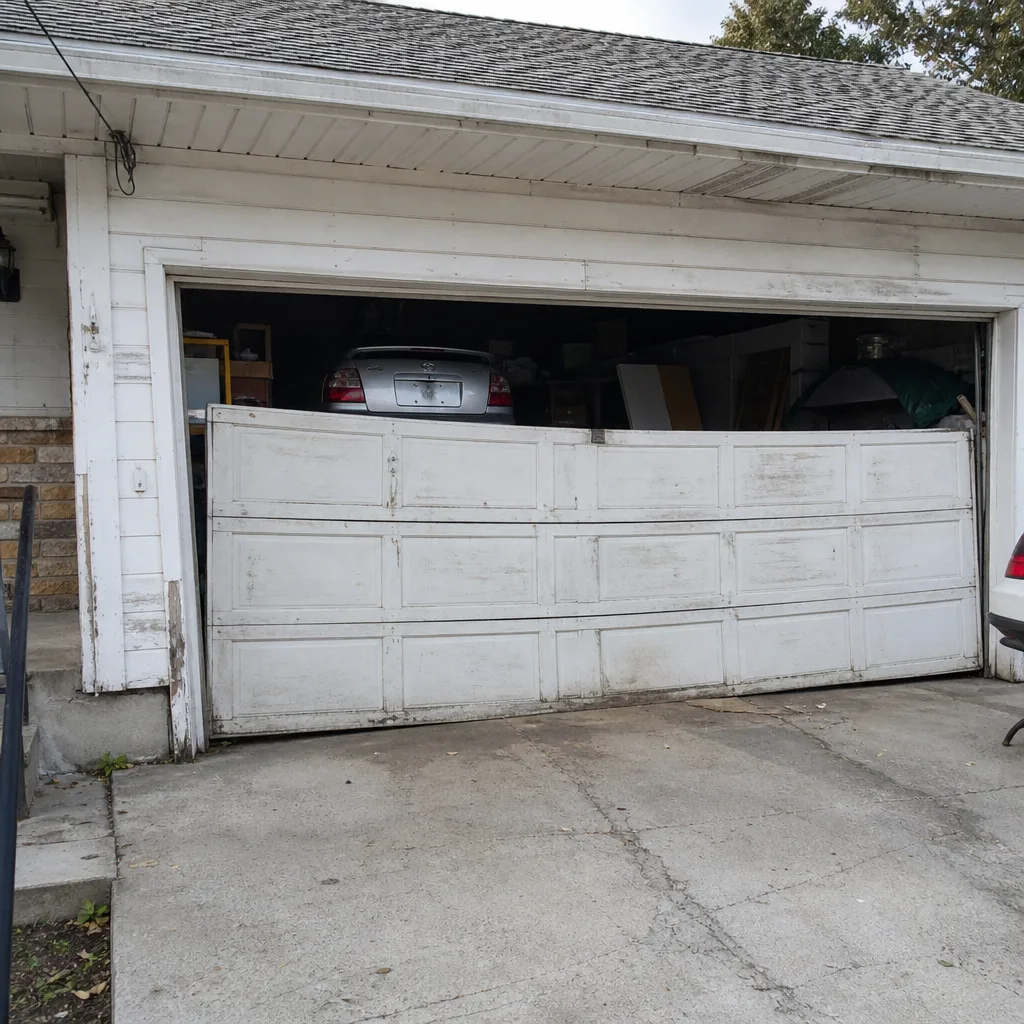 Before
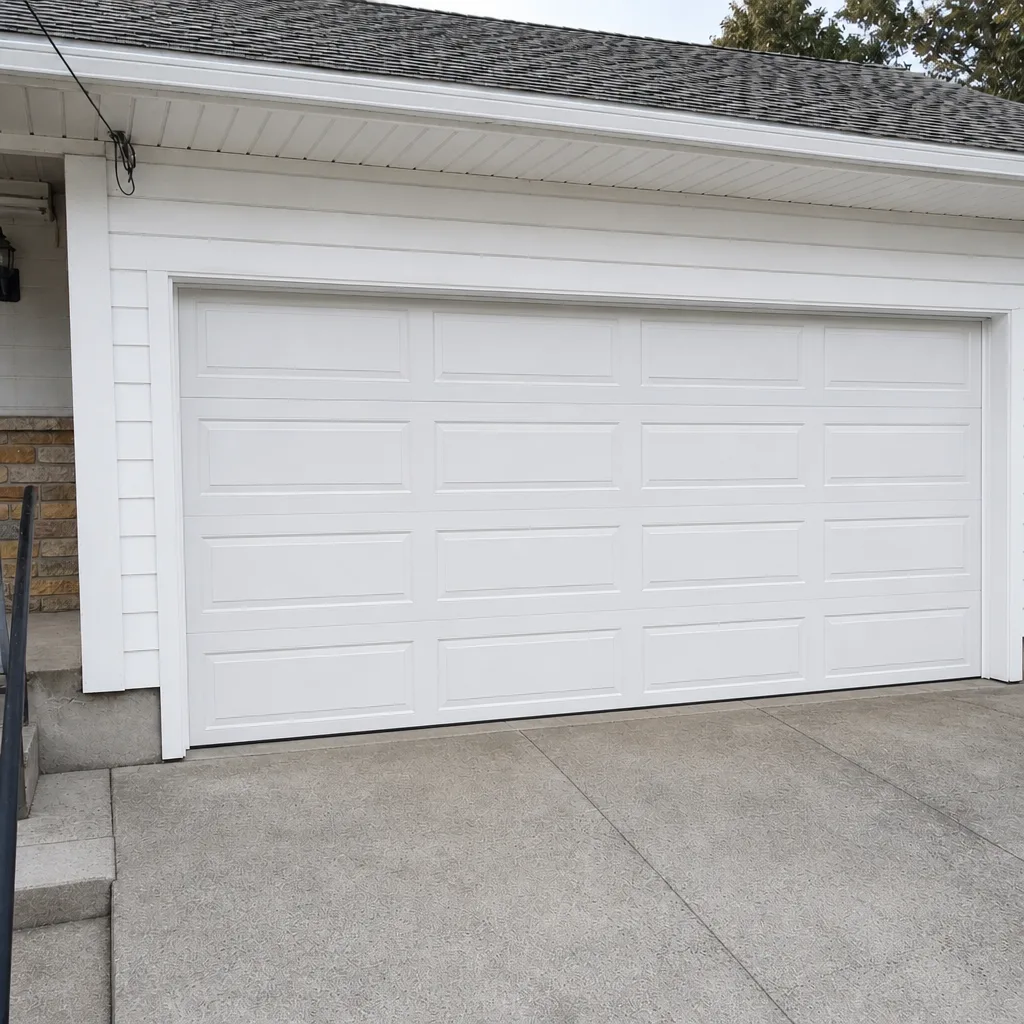 After
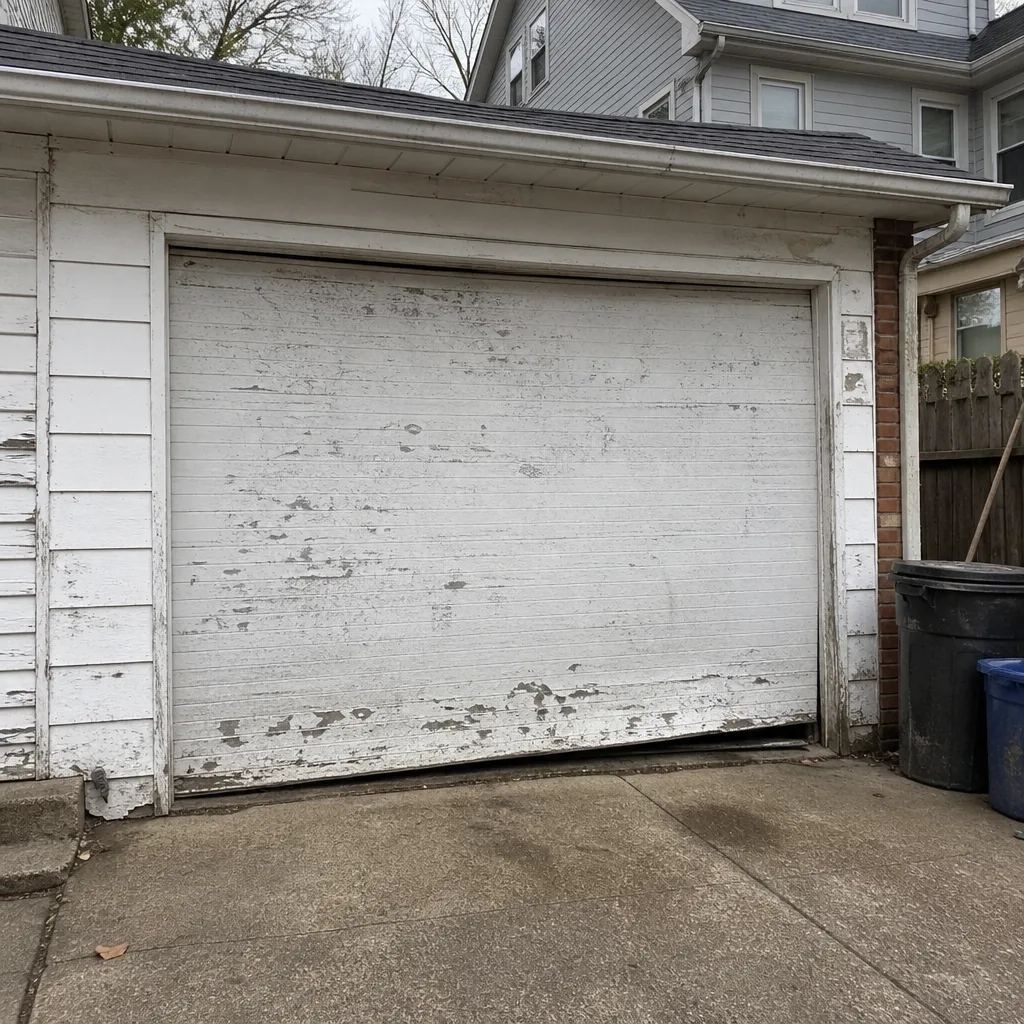 Before
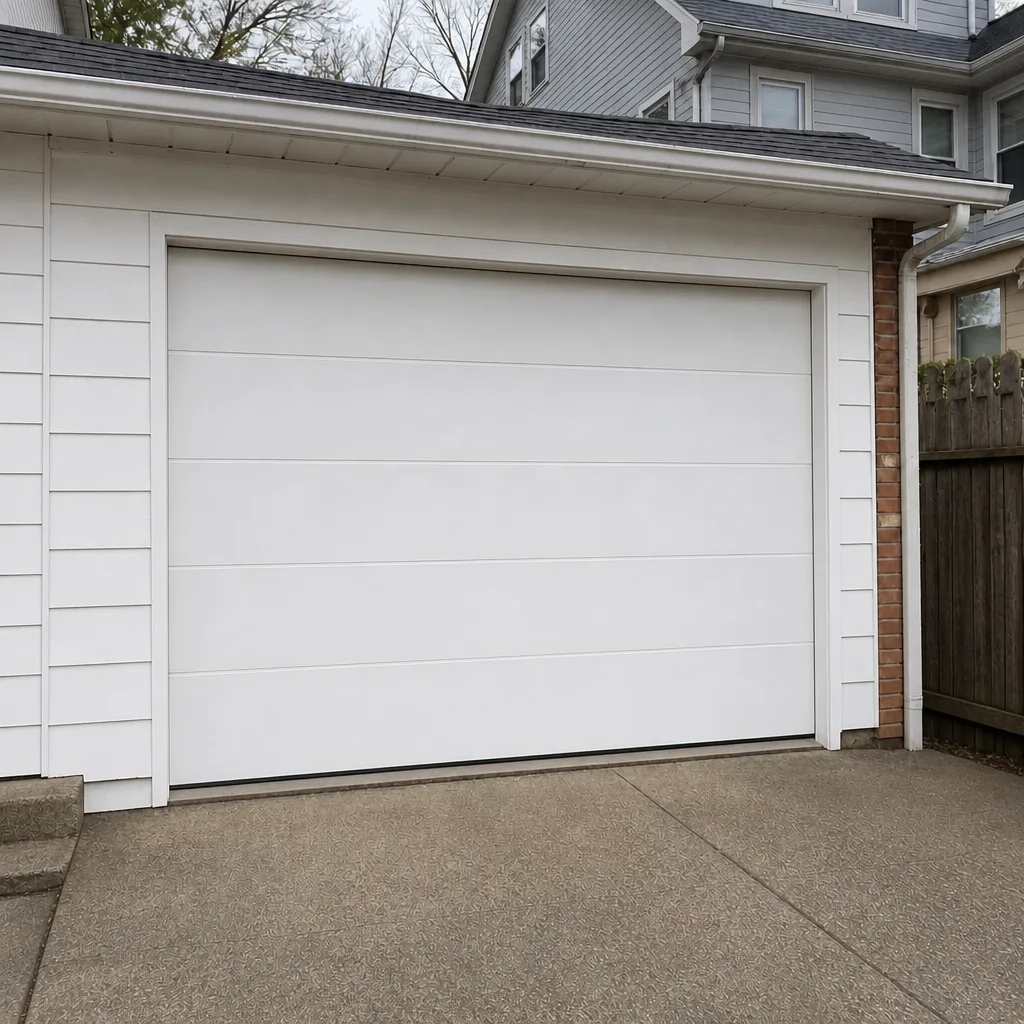 After
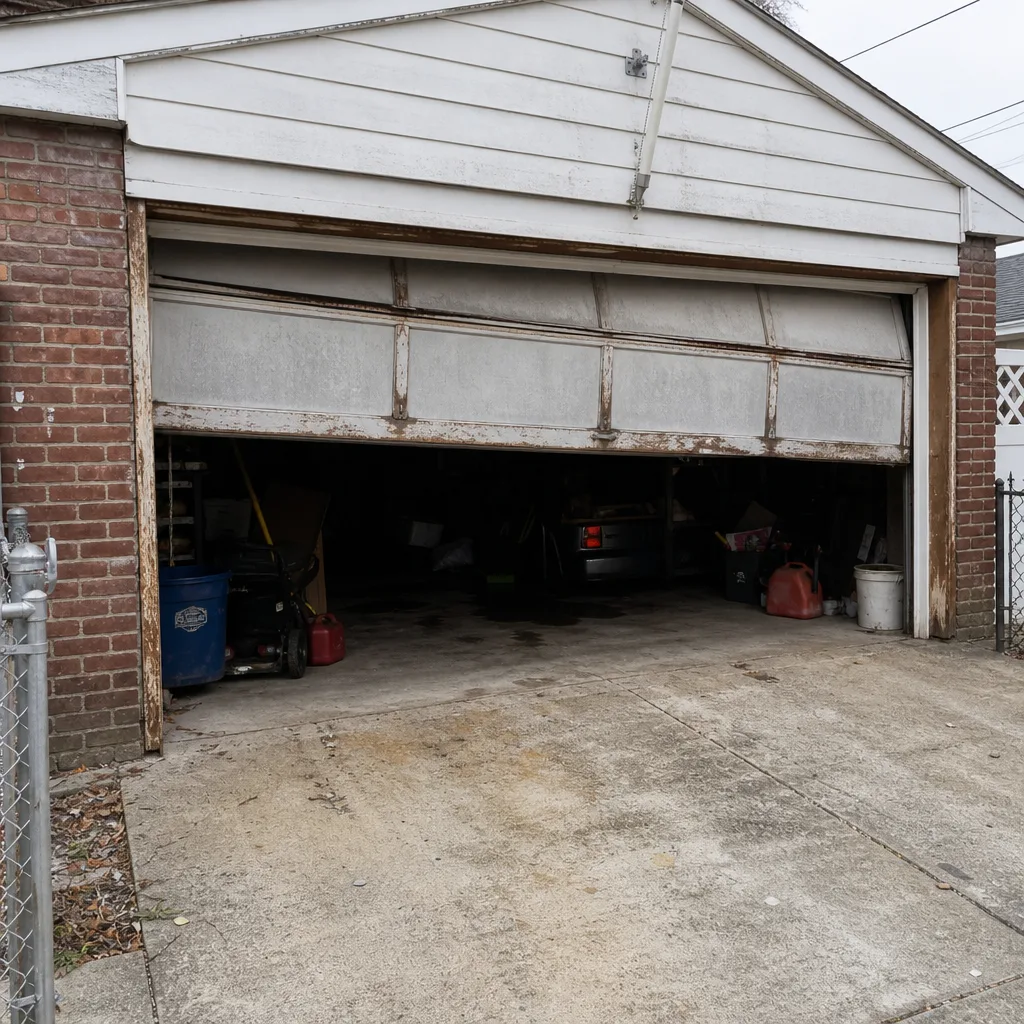 Before
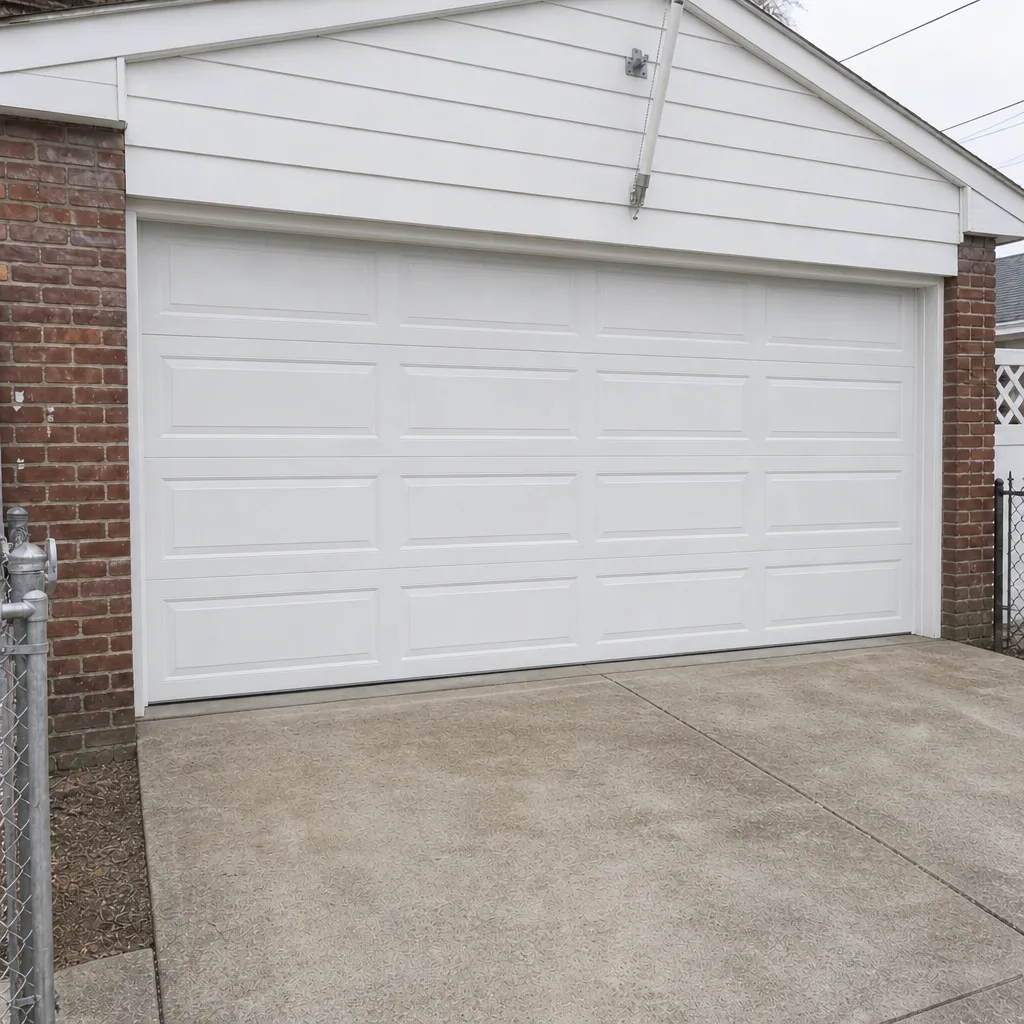 After
When to Call a Professional
Some problems are genuine emergencies. A snapped spring, a door hanging off its track, or an opener that won’t reverse on contact all need a trained technician, not a ladder and a YouTube video. Springs and opener safety systems are the two places where a mistake can cause serious injury, which is exactly why spring repair is a named specialty and not a sideline.
Other signs warrant a call too: grinding or binding as the door travels, a door that sags or doesn’t stay balanced, a remote or keypad that’s stopped responding, water or daylight showing under a closed door, or a door that’s getting harder to open as the seasons change. These usually point to worn springs, tired tracks, aging weatherseal, or an opener working beyond its limits.
Paterson Garage Door Repair offers free estimates in Paterson – call (866) 937-7714. It helps to know what you’re walking into: the price is quoted and agreed before any work starts, and the written estimate sets the final price.
Frequently Asked Questions
Yes, some failure modes do show up earlier here. The Passaic River basin’s freeze-thaw cycling and humid summers put more stress on weatherseal, exposed steel, and springs than a drier, milder climate would. That doesn’t mean doors fail constantly – it means the parts most exposed to moisture and temperature swings wear out on a shorter schedule, so maintenance and correct material choice matter more.
Repair is usually the right answer when the door panels and frame are structurally sound. Most problems in Paterson garages trace to springs, openers, tracks, rollers, or weatherseal, and all of those are repairable. Replacement makes sense when panels are rusted through, the frame is compromised, or repeated repairs add up to more than a new door. A specialist diagnoses first and recommends replacement only when the door itself is the problem.
We work on the brands that actually dominate Paterson installs: LiftMaster, Chamberlain, Genie, Clopay, Amarr, Wayne Dalton, Craftsman, and Raynor. Multi-brand fluency means faster diagnosis because the technician already knows the quirks and common failure points of your specific system, whether it’s a Wayne Dalton door or a Genie opener.
Because springs are the most dangerous part of any garage door system. They store enormous tension and carry the full weight of the door, and a mistake during replacement can cause serious injury. Spring repair is a safety-critical job that belongs with a trained technician – it isn’t a DIY project, and it shouldn’t be handled by a generalist who only does doors on the side.
No, our approach is fix first and replace only when necessary. Repairs to springs, openers, tracks, and weatherseal solve the large majority of problems we see. If a new door is genuinely the better path, a specialist will explain why with the diagnosis in hand, not lead with a sale.
It does, especially for attached garages, which is most of Paterson. A better-insulated door with a higher R-value slows heat transfer and helps prevent condensation on the inside face of cold steel, which is a common rust cause in a humid climate. When you compare doors, ask about R-value and construction, not just material and color.
The Bottom Line
Garage door decisions in Paterson should follow this city’s conditions, not a generic suburban template. Choose steel or insulated steel with a proper factory finish, and load a higher R-value into any attached garage. Respect the tight clearances and alley access of urban lots when sizing a door. Keep weatherseal current because freeze-thaw cycling destroys it faster here. And when something fails, treat it as a system – springs, opener, tracks, seal, and hardware all stress each other – and get a diagnosis before you agree to replacement. Repair first. A specialist who knows your brand will fix the right thing the first time.
Written by the team at Paterson Garage Door Repair.
Call (866) 937-7714 for a free estimate.