
Last updated November 20, 2026
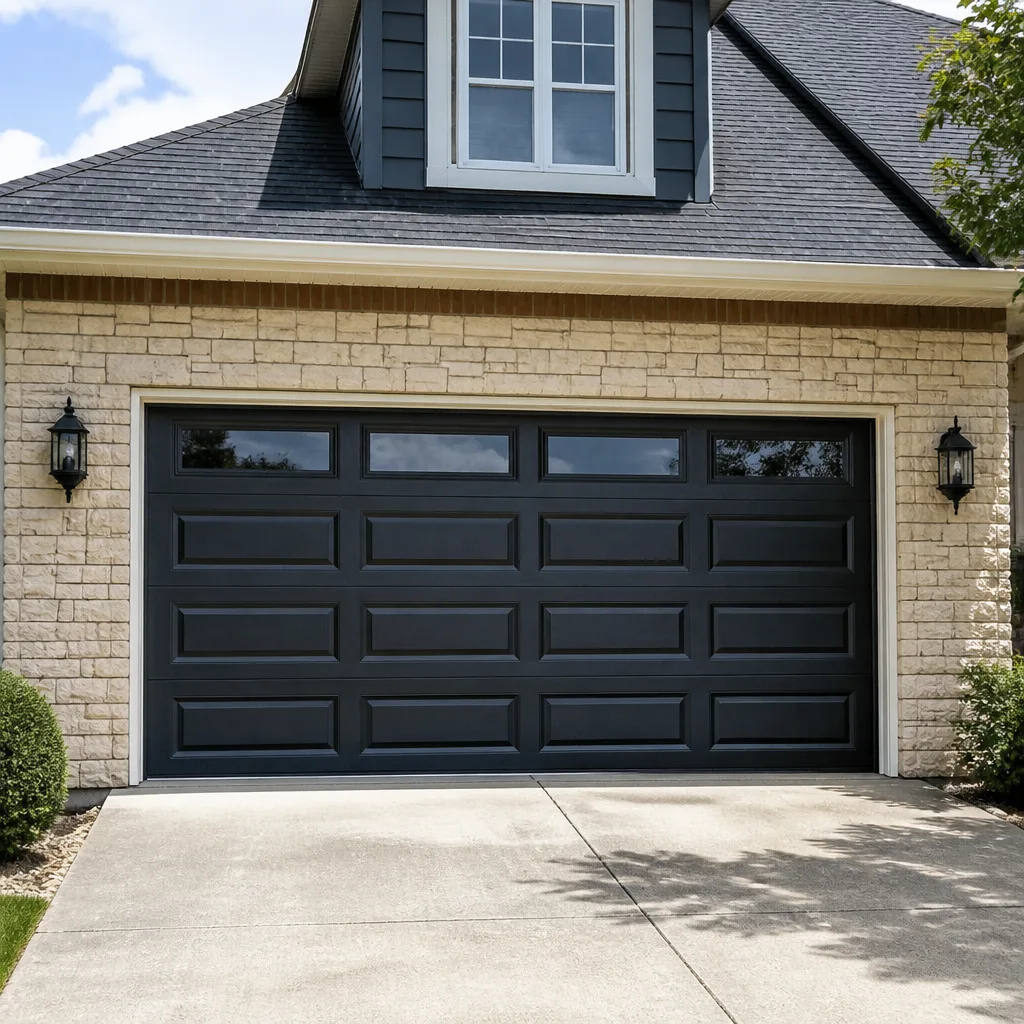 Raised-panel steel
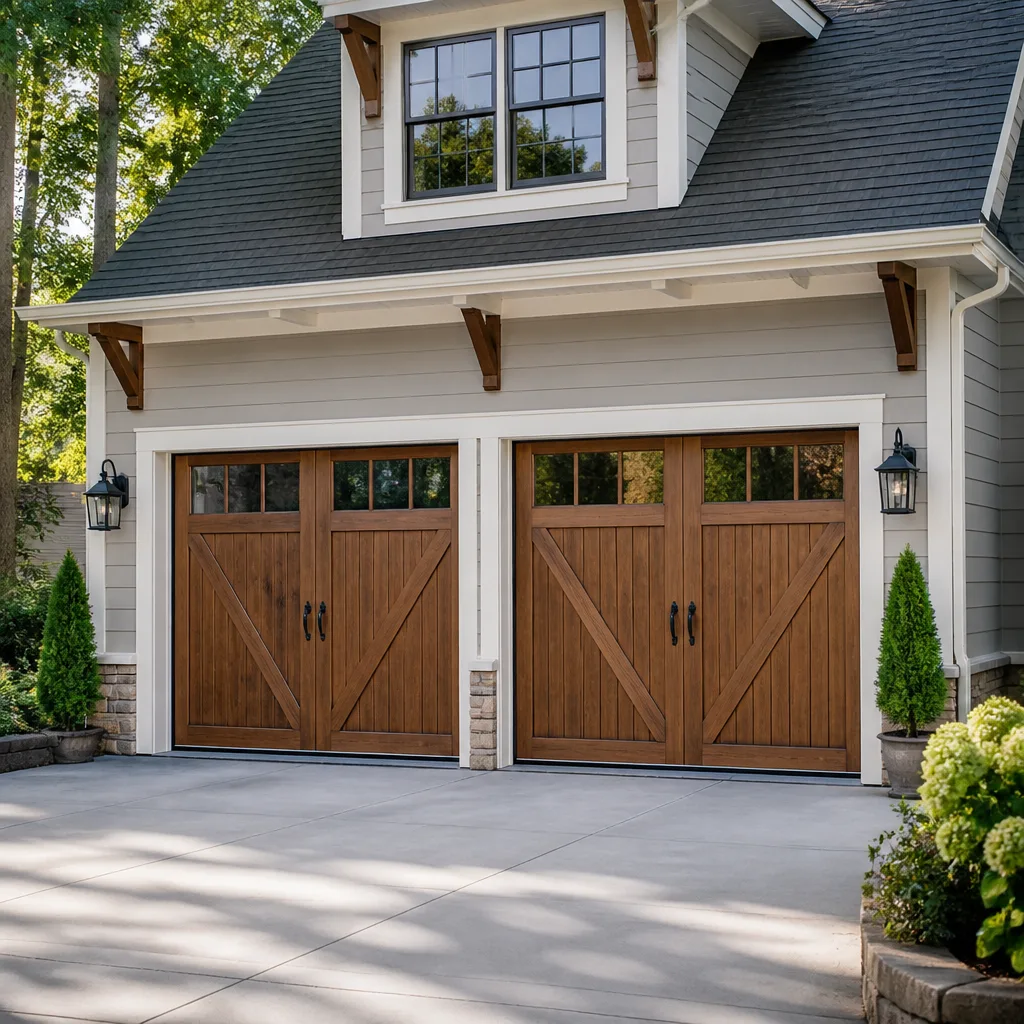 Carriage house
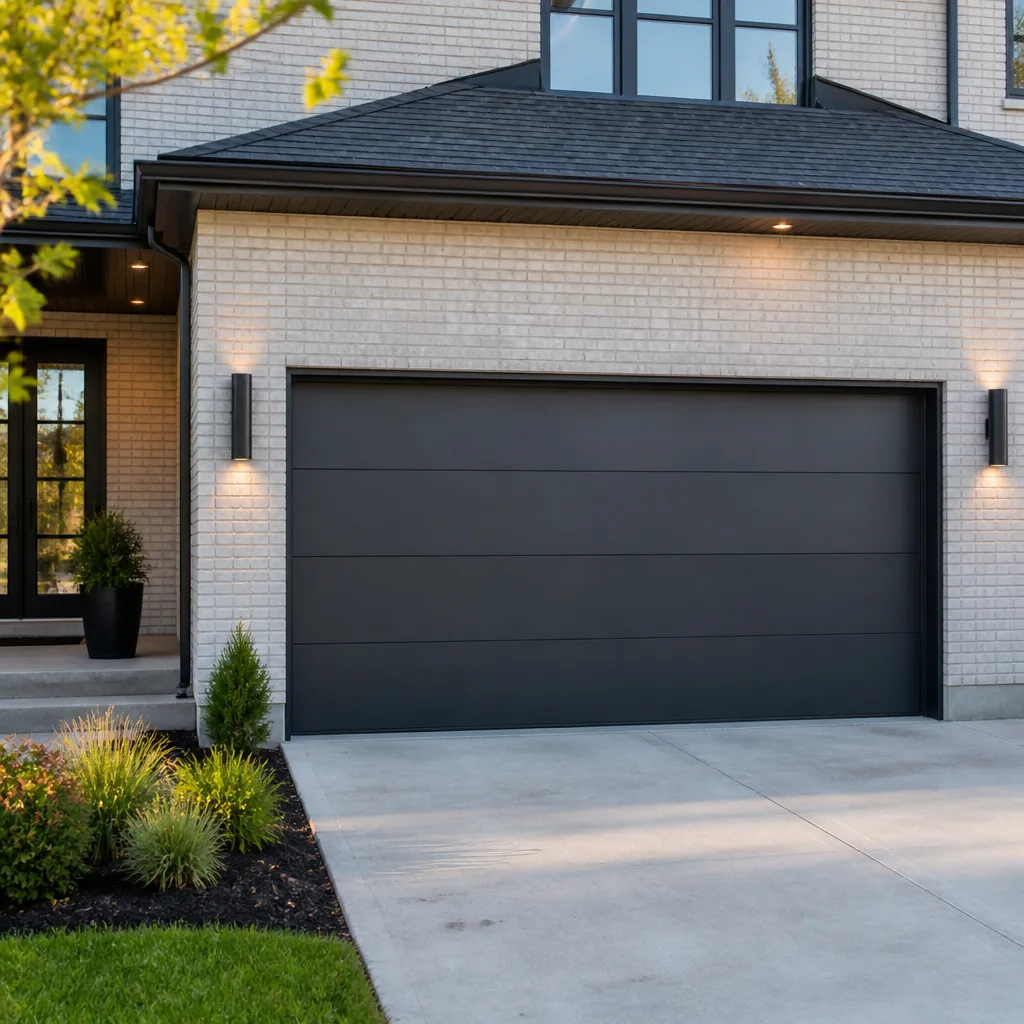 Modern flush
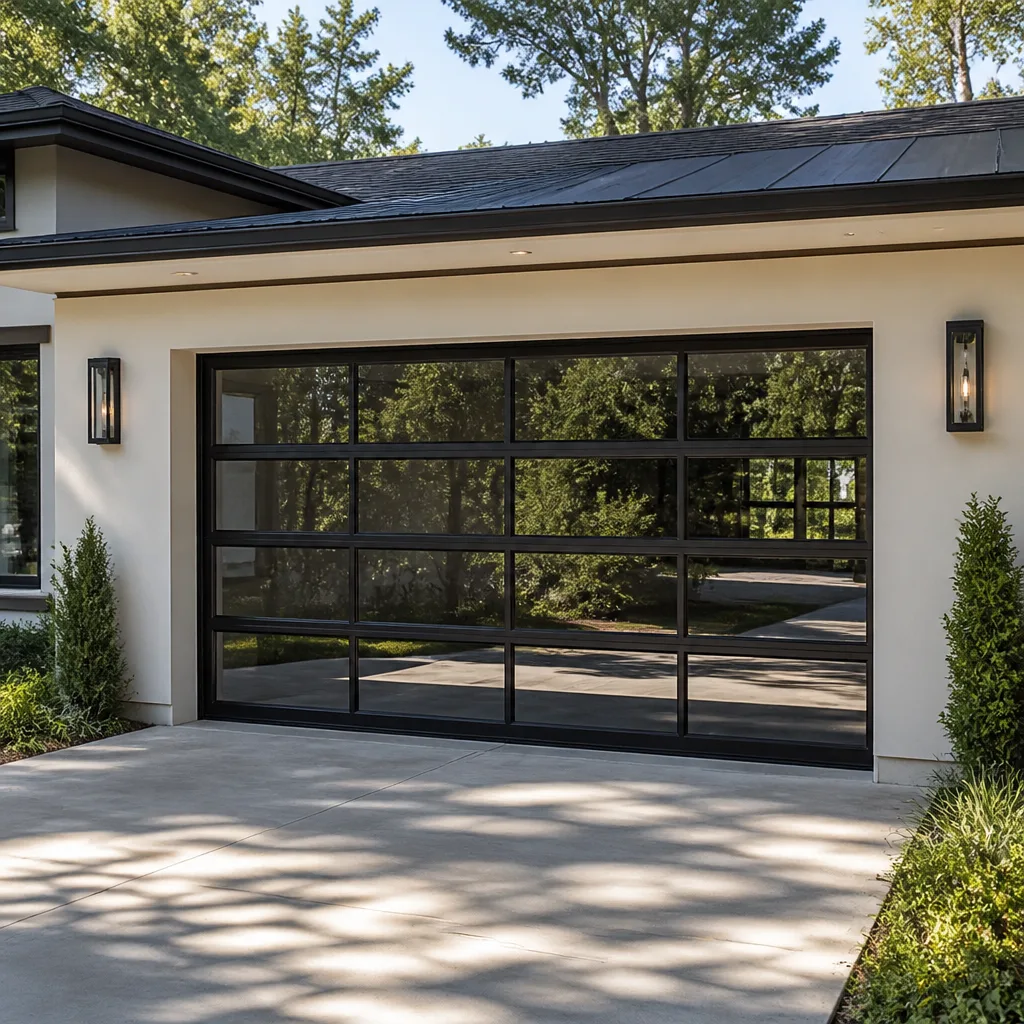 Full-view glass
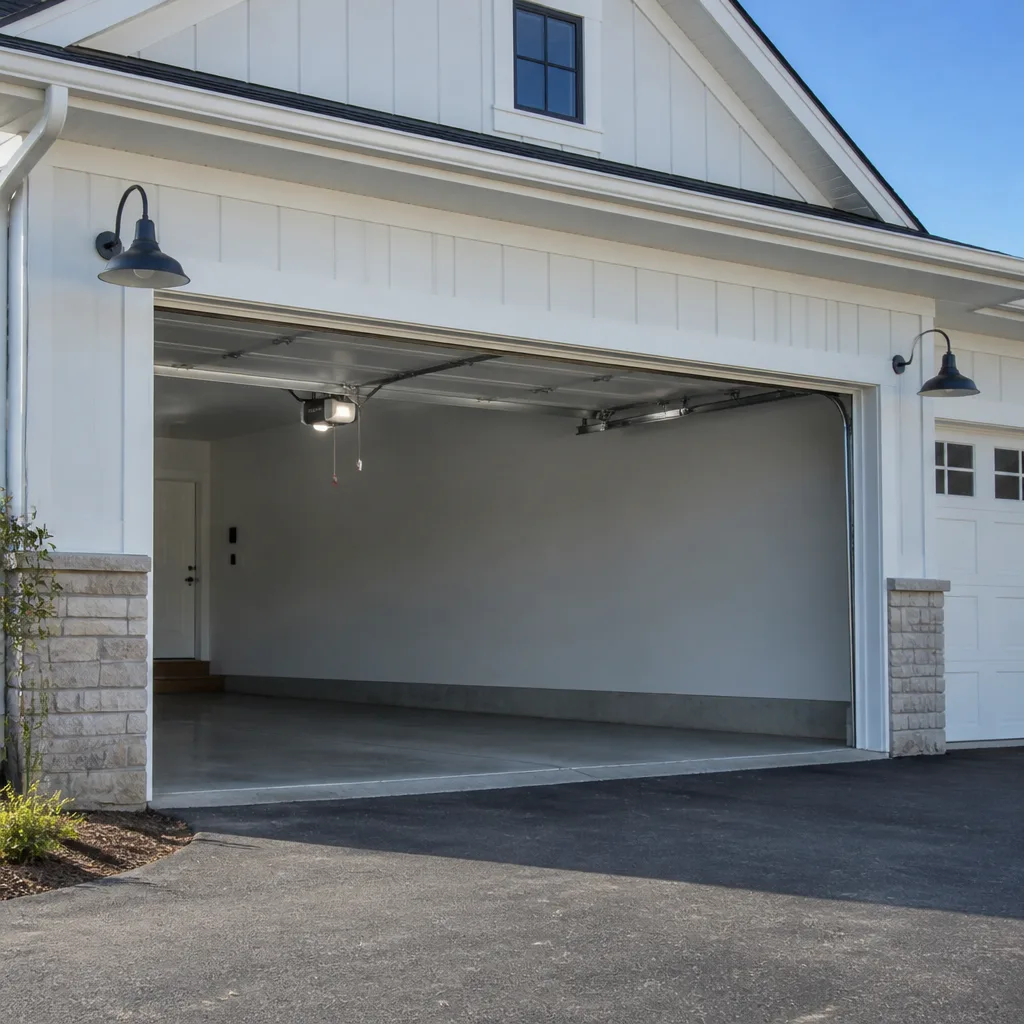 LiftMaster openers
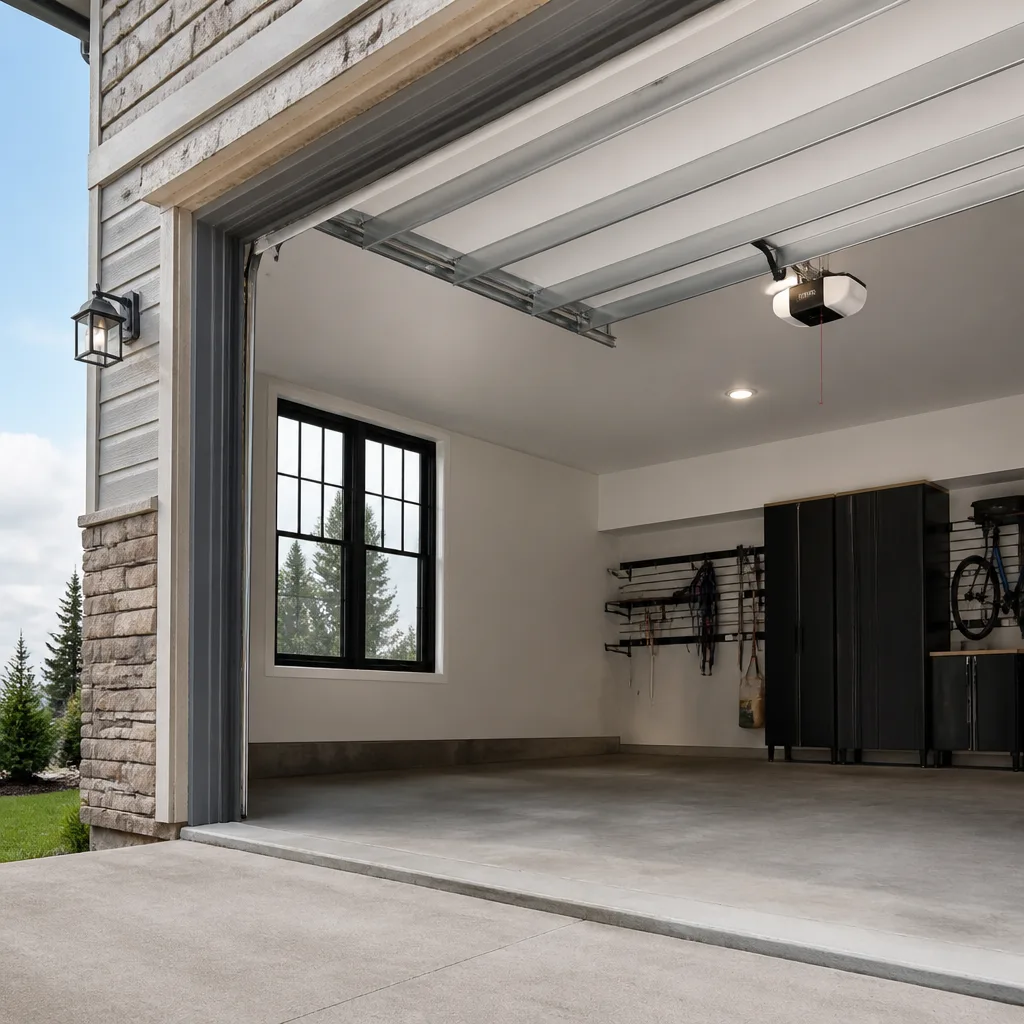 Chamberlain openers
Full 25-point door and opener safety check with every visit - springs, cables, rollers, tracks, and your LiftMaster or Chamberlain opener included
You get a price before we start. It does not change when the pro arrives.
Get your free estimateGarage Door Warning Signs: A Paterson Homeowner’s Reference Guide
A grinding noise and a scraping noise sound almost identical from inside the house, but they point to completely different components failing. One is usually a worn opener gear or a dry roller; the other is often a door panel dragging against the frame or a bent track. Get that call wrong and a technician shows up prepared for the wrong repair, or you write off a serious problem as “just a noise.” Most garage door failures in Paterson don’t happen without warning. They happen because homeowners weren’t sure whether what they were hearing or seeing was normal variation or an early failure signal. This reference guide is built to be read in the moment. It translates specific symptoms into specific diagnoses, tells you which ones mean stop using the door immediately, and which ones you can safely keep an eye on. We cover sound, movement, appearance, and opener behavior as separate diagnostic categories so you can match what you’re experiencing to what’s actually wrong.
Quick Answer
The most common garage door warning signs are unusual noises (grinding, scraping, popping, or snapping), a door that moves unevenly or reverses before closing, visible gaps between the door and the frame, frayed or slack cables, and an opener that strains, hesitates, or stops responding to the remote. Anything involving springs, cables, or a door that has come off its track means stop using the door and call a professional. Our technicians have up to 11 years of experience and can diagnose which component is failing before it becomes a full breakdown.
Styles & brands we work with
- Raised-panel steel
- Carriage house
- Modern flush
- Full-view glass
- LiftMaster openers
- Chamberlain openers
Table of Contents
- What Do the Noises Tell You? A Sound-Based Diagnostic
- Why Is the Door Moving Unevenly or Reversing?
- Is the Door Slow Because of the Opener or the Springs?
- What Do Gaps, Sagging, and Misalignment Mean?
- How Do You Tell a Fraying Cable from a Loose One?
- What Is Your Opener Trying to Tell You?
- Which Warning Signs Are Safe to Watch and Which Mean Stop?
- What Paterson Homeowners Should Know About Local Conditions
What Do the Noises Tell You? A Sound-Based Diagnostic
Sound is the earliest warning a garage door gives you, and it’s also the most misread. Homeowners tend to lump every noise into “the door sounds bad,” but the type of noise narrows the diagnosis fast. Here’s how we break it down.
- Grinding: Usually a worn opener gear, a dry or seized roller, or debris in the track. Grinding tends to be constant through the whole travel of the door. It’s rarely an emergency, but it accelerates wear.
- Scraping: A door panel or hinge dragging against the frame or track. Often caused by a bent track, a loose hinge, or a door that’s shifted. Scraping should be looked at soon because it can damage the panel.
- Popping or snapping: Often a spring issue, a cable jumping its drum, or a torsion tube shifting. This is a stop-and-call noise. A spring under tension is the most dangerous part of the system.
- Rattling: Loose hardware, a worn roller, or a hinge that’s backed out. Usually minor, but worth tightening before it becomes a vibration problem.
- Clicking at the opener head: The opener’s logic board or gear assembly. Clicking with no door movement points at opener electronics, not the door.
In our experience, the noise people describe as “grinding” is the one we most often find is actually scraping, and vice versa. If you can, stand in the garage with the door closed while someone runs the opener from outside (or use the wall button), and note whether the sound comes from the opener head, the center of the door (spring area), or along the sides (track and rollers). That single observation saves a lot of diagnostic time. If the noise is a snap or a bang, and the door still opens, treat it as a spring or cable event and stop using the door until we’ve looked at it.
Why Is the Door Moving Unevenly or Reversing?
A door that moves unevenly or reverses before it closes is telling you that either its travel is obstructed, its springs are unbalanced, or its safety sensors are misreading. Those are three different fixes, and the movement pattern usually distinguishes them.
- Door moves up on one side faster than the other: Unbalanced spring tension or a seized roller on one side. This is a spring or track issue, not an opener issue. A torsion system with uneven tension puts extra load on the opener and can snap a cable.
- Door goes up fine but reverses a few inches off the floor: Almost always the safety sensors. The eyes at the bottom of the tracks may be misaligned, dirty, or blocked by a stored item. Check that the two indicator lights are steady (not blinking) before calling.
- Door reverses partway up: Travel limits or a force setting on the opener, or a binding track. The opener is detecting resistance and interpreting it as an obstruction.
- Door jerks or stutters through travel: Worn rollers, a dry or bent track, or a failing gear in the opener. Jerking is a “get it looked at” sign because it stresses every other part of the system.
What we see most in Paterson is the door that reverses off the floor, and homeowners who immediately assume the opener is failing when it’s a sensor that got bumped. Before you call, look at the sensor eyes and wipe them. If the door still reverses, it’s worth a diagnostic. If the door moves unevenly from side to side, don’t keep cycling it. An unbalanced door that keeps running can pull a cable off its drum, and that’s a different, more serious repair. If you’re seeing side-to-side unevenness, that’s a good moment to book garage door repair rather than wait for the door to fail entirely.
Is the Door Slow Because of the Opener or the Springs?
This is the single most misread symptom we encounter. A slow door can be an opener problem or a spring problem, and the two get confused constantly. The distinction matters because a dying spring will eventually fail completely, and a failing opener just eventually stops.
Here’s how to tell them apart without touching anything:
- The door feels heavy when you disengage the opener and lift it by hand (only if you can do it safely from outside the door’s path): Heavy lift, or a door that won’t stay up when raised halfway, points at the springs. A properly balanced door should lift with modest effort and hold position at mid-travel.
- The door lifts fine by hand but the opener struggles to move it: The opener is the problem, not the door. The motor is losing torque, the gear is worn, or the logic board is failing.
- The door runs slow but the opener sounds normal: Usually a spring tension loss on a torsion system, or a stretched extension spring. The opener is working, it’s just fighting a heavier door.
- The door is slow and the opener sounds strained or warm: The opener is working harder than it should, which often means the door is out of balance. The opener is the messenger, not the cause.
Age of the opener matters less than how it’s behaving. A garage door opener repair call on a Genie or LiftMaster unit that’s straining is often actually a door balance issue. We check the door’s balance first because fixing the opener without fixing the balance just wears out the replacement. If the door is heavy and the opener is straining, the springs are the lead. If the door is light and the opener is failing, the opener is the lead. We don’t assume either way until the door has been checked with the opener disengaged.
One safety note: don’t try to adjust spring tension yourself. Torsion and extension springs are under extreme load, and the tools and technique required aren’t something to improvise. If the door is heavy or the springs look wrong, stop using the door and have it assessed. That’s not caution for its own sake; it’s the difference between a repair and an injury.
What Do Gaps, Sagging, and Misalignment Mean?
Visual signs are the ones homeowners can track over days and weeks without doing anything risky. A door that looks slightly off is usually telling you about track and structural problems before they become derailments.
- A gap between one door panel and the frame: The door may be off-level or the track on that side may have shifted. A vertical gap that grows over time is a track problem.
- A horizontal gap between panels: A bent hinge, a loose panel, or a roller that’s jumped its track. If the gap appears suddenly, stop using the door.
- Visible sag in the top section: Often a torsion system that’s lost tension or a bent top section from an impact. Sagging is a stop-and-call sign.
- Uneven gaps at the floor (one side touching, one side raised): The door isn’t level, which points at track alignment or a floor that’s settled. Common in older Paterson garages.
- Rust or paint cracking along a hinge line: A sign the door is flexing more than it should at that hinge. Worth mentioning on a diagnostic call.
Look at the door from inside the garage, straight on, with the door closed. Any line that isn’t parallel to the floor or the frame is a track or alignment clue. Then run the door partway up and look again. A gap that changes as the door moves is a track that’s out of alignment, not a panel that’s warped. These visual signs are the ones we most often catch early enough that a track adjustment is all the repair needs. Left alone, a misaligned door eventually derails, and that’s a bigger repair.
How Do You Tell a Fraying Cable from a Loose One?
Both look alarming, and both are worth understanding before you call. A loose cable and a fraying cable aren’t the same problem, and only one is immediately dangerous. Cables are under high tension on a torsion system, so the line between “look at it” and “stop using the door” is firm.
Here’s how to read them:
- A loose cable: The cable sags away from the drum or hangs slack along the side of the door. This usually means the door is out of balance, a spring has lost tension, or the cable has jumped its drum. It’s not safe to keep running, because the door can drop.
- A fraying cable: You can see broken wire strands, a fuzzy or “hairy” appearance, or a kink. Fraying means the cable’s load-bearing capacity is compromised. This is an immediate stop-use situation, because the cable can snap under tension.
- A cable off the drum entirely: The cable has wound wrong or jumped. The door is no longer safely supported on that side. Stop using the door and don’t try to re-wind it yourself.
- Both cables look slack after the door closes: This is normal on some lower-tension extension systems, but not on torsion. If you’re not sure which system you have, don’t guess. Call it in.
Our rule for homeowners is simple: if you can see the wire strands hanging loose or the cable looks fuzzy anywhere, don’t run the door. A spring or cable failure can drop the door suddenly, and that’s a serious injury risk. This is exactly the kind of job our garage door spring repair specialists handle, and it’s not a job for a general handyman. Springs and cables are the most dangerous part of any garage door system, and they require the right tools and technique. We replace them as a matched pair when one has failed, because the second isn’t far behind.
What Is Your Opener Trying to Tell You?
Opener behavior follows a pattern too, and the brands respond in ways we’ve learned to recognize. A LiftMaster or Chamberlain unit that blinks its light in a specific code, a Genie that hums without moving, a Clopay door that runs fine but the opener won’t respond – each of those is a different diagnosis.
- Remote works from inside but not from the driveway: Usually a weak battery in the remote, a blocked antenna wire, or interference. Not a door problem.
- Opener hums but the door doesn’t move: A stripped opener gear or a broken drive sprocket. The motor is running but the drive train isn’t. This is an opener repair, not a door repair.
- Opener runs and the door moves a few inches then stops: Force limits or travel limits, or a binding door. The opener is safety-tripping.
- Light flashes when you press the button but nothing moves: On many LiftMaster and Chamberlain units, the light pattern is a diagnostic code. It’s worth noting the flash pattern before you call.
- Wall button works, remotes don’t: Usually a receiver on the opener head or a remote pairing issue, not the door.
- Door works fine but the opener keeps running after the door stops: A limit switch or logic board problem. The opener thinks the door is still moving.
When you call, we ask what the opener does versus what the door does. That separation is the fastest way to know whether to book an opener repair or a door repair. Factory familiarity with LiftMaster, Chamberlain, Genie, and the other major brands we work on means we already know the diagnostic quirks of your system, so the call is quicker and the fix is targeted rather than guesswork. Knowing which brand we’re dealing with and how it typically fails under a specific symptom is how we avoid showing up prepared for the wrong repair.
Which Warning Signs Are Safe to Watch and Which Mean Stop?
The distinction homeowners need most is between signs you can note and keep an eye on, and signs that mean the door shouldn’t run again until it’s been looked at. Here’s how we sort them.
Safe to watch (note it, don’t panic):
- Occasional rattling or minor squeaking
- Slight grinding that has been consistent and not worsening
- A remote that needs to be closer to the door to work
- A door that’s slightly slower than it used to be but moves evenly
- Minor cosmetic gaps that don’t change as the door moves
Stop using the door immediately:
- Any snapping, popping, or bang during operation
- A door that lifted unevenly and now looks crooked
- A visible fraying, slack, or off-drum cable
- A sagging top section or a door that’s come off one track
- The door won’t close and reverses fully, repeatedly, after sensor checks
- A spring that’s clearly broken (visible gap in a torsion spring) or door that won’t lift at all
What you do with a “stop” sign should be simple: disengage the opener if you can do it safely, leave the door in the position it’s currently in, and call for a diagnostic. Our technicians have up to 11 years of experience, and our single-trade focus means we aren’t splitting time across general handyman work. Garage doors are all we do, which is why the diagnosis tends to be fast and accurate. If you’ve got a watch sign, note it and watch for changes. If you’ve got a stop sign, it’s time to call.
What Paterson Homeowners Should Know About Local Conditions
Some of what you’re seeing is specific to older homes in a city where garages weren’t built to a single standard. Paterson’s neighborhoods have a wide spread of garage ages and conditions, and that shows up in the warning signs homeowners bring to us.
- Out-of-level garage floors: Common in older neighborhoods around the city, where floors have settled. A door that closes unevenly at the floor is often reading a floor slope, not a problem with the door itself. The fix is usually a track or bottom seal adjustment, not a replacement.
- Freeze-and-thaw cycles: Northern New Jersey winters move the soil under garage slabs and stress door hardware. A door that closed cleanly in fall and scrapes in January is often a track that shifted a fraction with the ground. If you’re seeing that pattern, it’s worth a diagnostic.
- Humidity in summer: Real, and it’s rough on metal hardware. Rust along hinges and roller axles is a seasonal sign, not always a failure. Rust with binding or stiffness is worth a call.
- Hillside driveways: Parts of Paterson have sloped driveways, and a garage door on a sloped approach is more sensitive to track alignment and door balance. A door that works fine on a flat driveway can behave differently on a slope.
- Older opener remotes: Many garages here still have remotes from a system installed decades ago. If your remote or wall button is behaving oddly, the opener electronics may simply be at the end of their service life, and that’s a routine opener repair.
Cold-season behavior is the biggest seasonal clue in Paterson. A door that grinds or binds only when it’s below freezing is usually a lubrication or contraction issue, not a failing spring. A door that’s slow all year and worse in winter is more likely a balance issue. Neither is a reason to replace the door. Fix first, replace only when necessary is how we work, and in our experience most Paterson doors we’re called out to don’t need replacement. If you want to go deeper on what we handle, our main page covers the full scope of Paterson Garage Door Repair.
Common Mistakes to Avoid
- Assuming the opener is failing when the door is out of balance. A door that’s heavy is often a spring problem, not an opener problem. Replacing the opener without fixing the balance just wears out the new one.
- Ignoring a snapping or popping noise because the door still opens. Snaps usually mean a spring or cable is about to fail. The door working today doesn’t mean it will tomorrow. This is the most common mistake we see when a homeowner calls after a failure.
- Spraying lubricant on a spring or cable to “fix” a noise. Lubricant on the wrong part can attract grit and mask the real symptom. Springs and cables aren’t a lubrication fix. Keep it on the rollers, hinges, and tracks.
- Trying to adjust spring tension or re-wind a cable yourself. These are the most dangerous parts of the system. If a spring or cable looks wrong, stop and call. This is the single most important line in this guide.
- Misreading a track problem as a door panel problem. A gap that changes as the door moves is usually a track alignment, not a warped panel. Getting that wrong can lead to an unnecessary door replacement.
- Booking the wrong repair on the phone. “My door is slow” could be an opener repair or a spring repair. Describing what the door does versus what the opener does helps the technician bring the right parts and expect the right job.
- Not mentioning the brand. LiftMaster, Chamberlain, Genie, Clopay, Amarr, Wayne Dalton, Craftsman, and Raynor all have different failure patterns. Telling the technician what’s on your door saves a diagnostic step.
See the difference
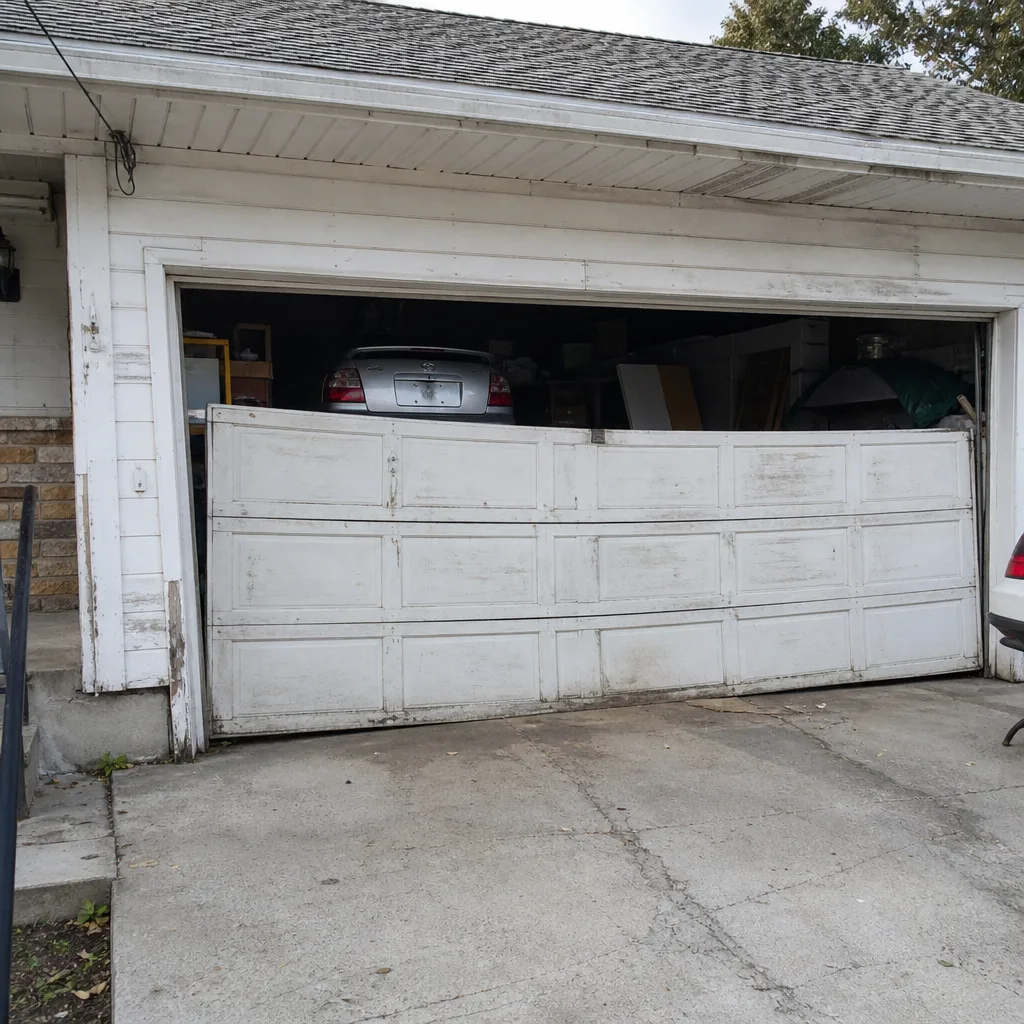 Before
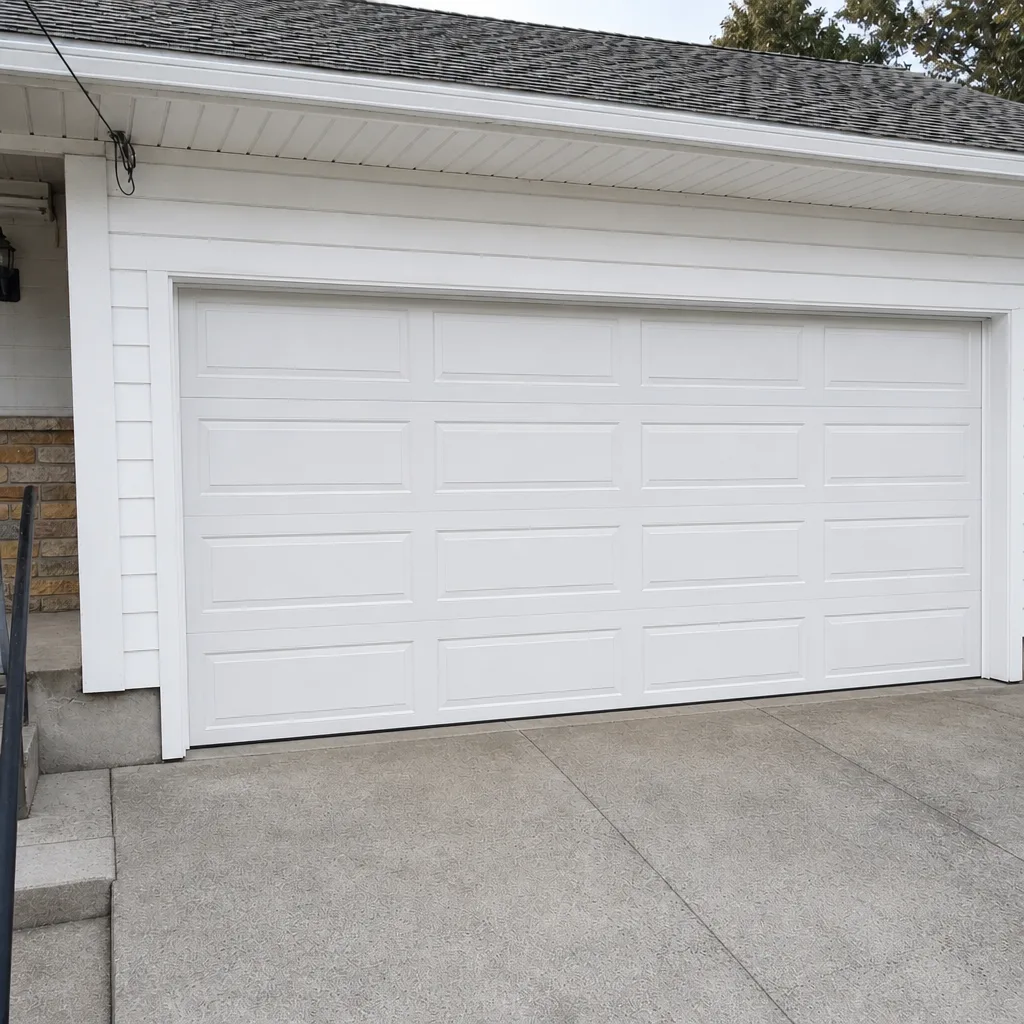 After
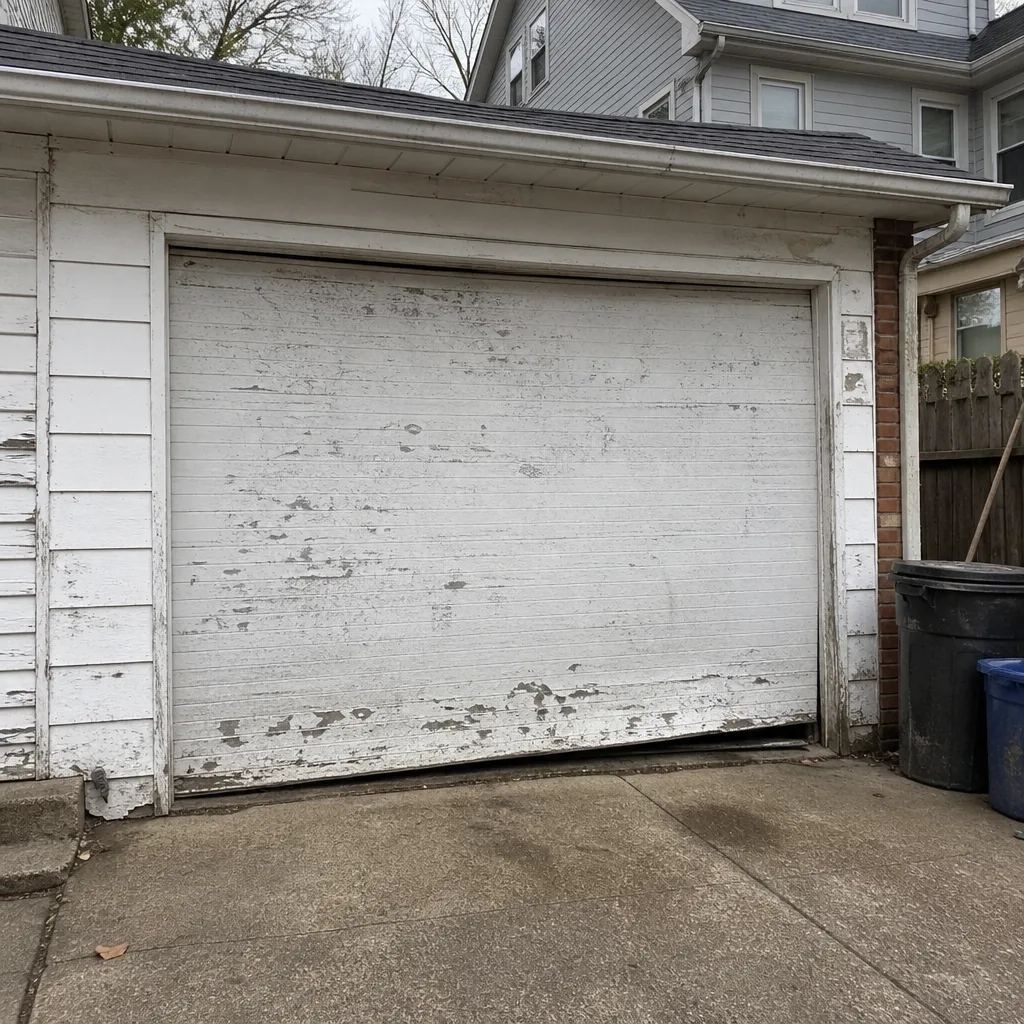 Before
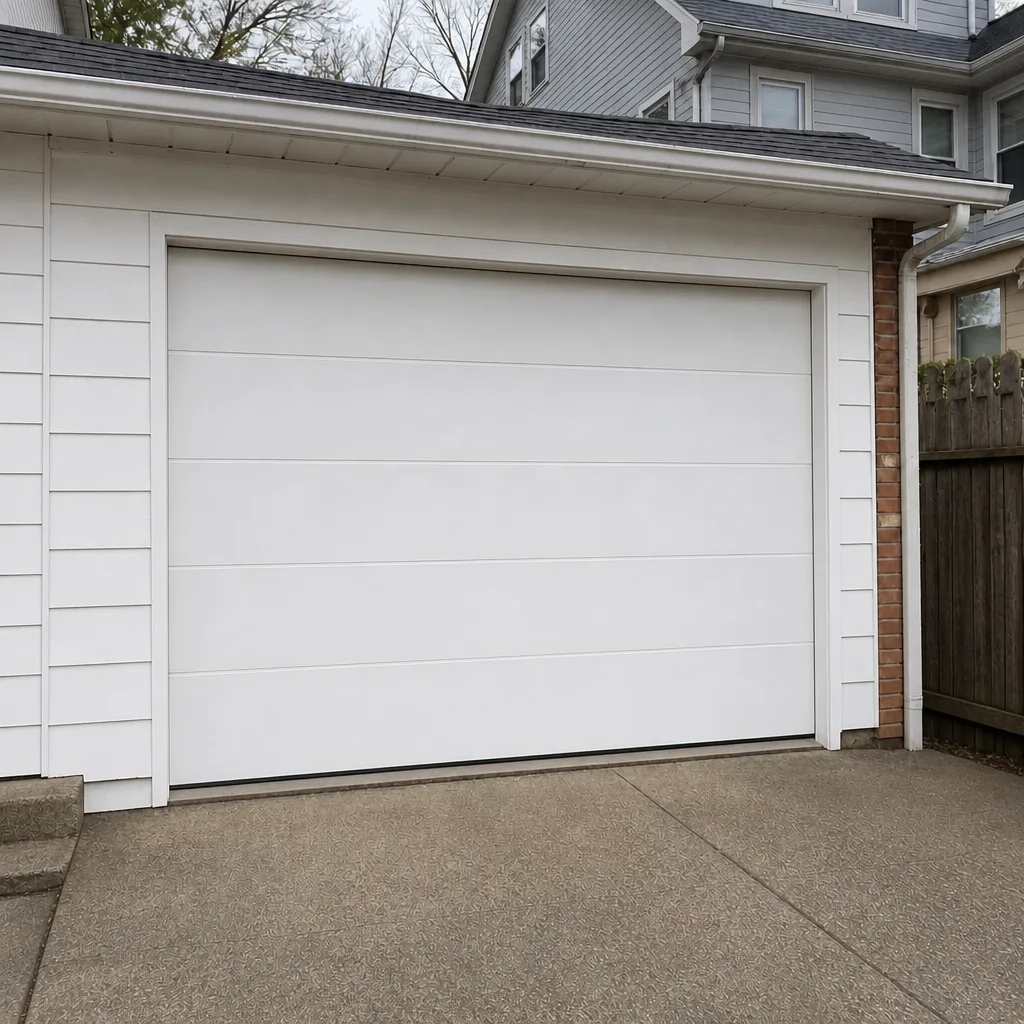 After
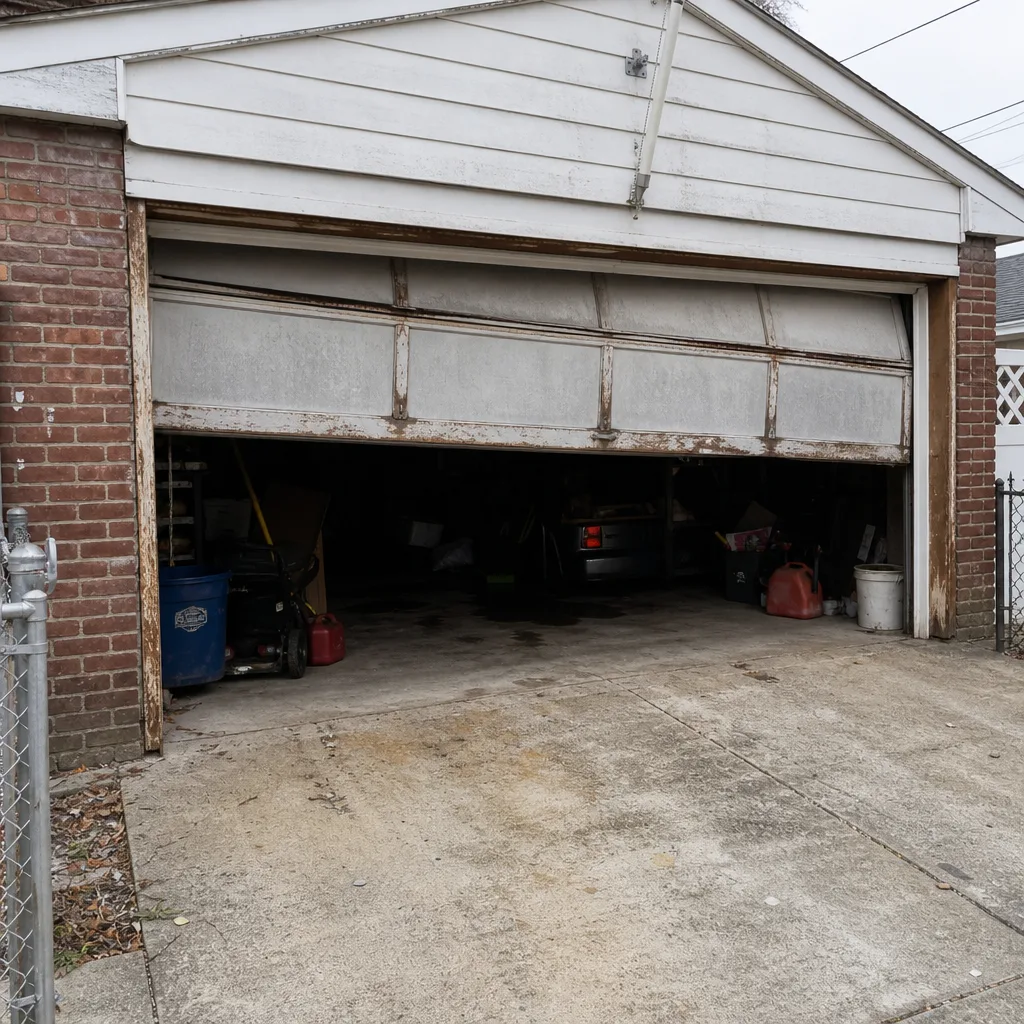 Before
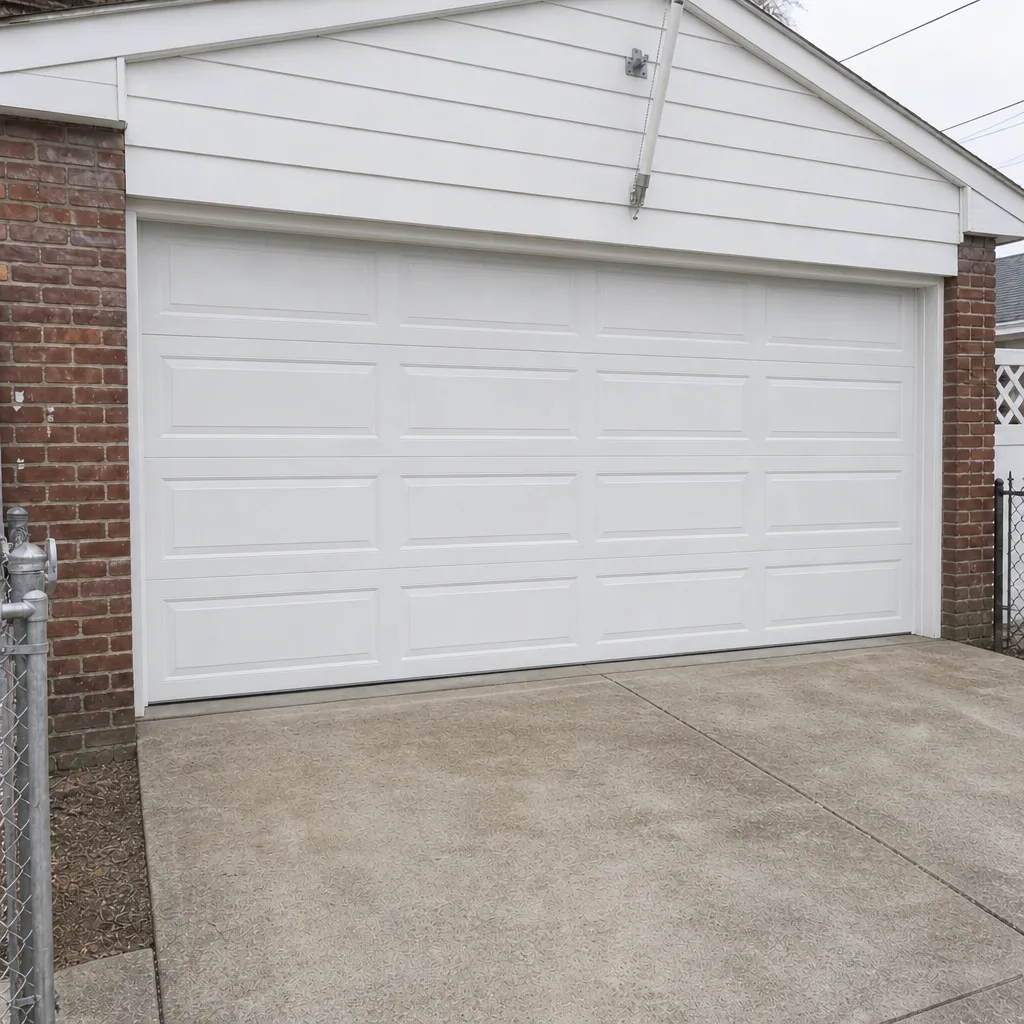 After
When to Call a Professional
Call a professional if you’re seeing any of the following: a snapping or popping noise, a door that lifted unevenly or now looks crooked, a visible fraying or slack cable, a door off its track, a sagging top section, or a spring that’s clearly broken. Call if the door reverses repeatedly after you’ve checked the sensor eyes. And call if you’re unsure. Our technicians have up to 11 years of experience, and we’d rather look at a symptom early than have you call after the door has failed. Paterson Garage Door Repair offers free estimates in Paterson. Call (866) 937-7714. We answer 24/7. Fast dispatch from 7am to 7pm, Sunday through Friday. We’ll tell you what the symptom points to and what the fix involves before any work starts, with the price quoted and agreed in writing first.
Frequently Asked Questions
The most common is a change in sound, usually a grinding or scraping that wasn’t there before. It’s also the most misread, because homeowners often aren’t sure whether the noise is normal or a failing component. A new noise that persists through the whole travel of the door is worth a diagnostic. Call (866) 937-7714 for an exact quote on a diagnostic; estimates are free.
Sometimes, and the questions that separate them are simple. A door that’s heavy and slow usually points at springs; a door that’s light but the opener strains points at the opener. We ask what the door does versus what the opener does, and which brand is installed, because brand familiarity guides the diagnosis. Call (866) 937-7714 for a free estimate.
Spring repair is priced per job by written estimate, and the range depends on the spring type and what’s being replaced. For a torsion spring, one spring runs a typical $180 to $320 and a matched pair runs about $360 to $640, since pairs are usually replaced together. Extension springs run a typical $150 to $280 per spring, with a pair at about $300 to $560. The written estimate sets the final price, and you’ll have that before any work starts. Call (866) 937-7714 for an exact quote; estimates are free.
The written estimate is the price. If the technician finds an additional problem, they’ll explain it and you’ll get a revised estimate before any extra work is approved. You won’t get a larger invoice than the quote without your okay. Call (866) 937-7714 for a free estimate.
The local garage door professionals we connect you with are licensed and insured as their state requires. Our technicians have up to 11 years of experience, and the work is done by garage door technicians, not multi-trade handymen who also do garage doors. Call (866) 937-7714 for a free estimate.
No, don’t keep running it. A slack cable means the door isn’t safely supported on that side, and the door can drop without warning. A fraying cable is an immediate stop-use situation. Treat either one as a call-now symptom, not a watch-and-see one. Call (866) 937-7714 for an exact quote; estimates are free.
The Bottom Line
Most garage door failures announce themselves before they happen. The key is matching the symptom to the right component: grinding versus scraping, slow opener versus slow springs, a loosening gap versus a warped panel, and a loose cable versus a fraying one. Anything involving springs, cables, or a door that’s come off its track means stop using the door and call. Everything else is a watch-and-note sign that’s worth a diagnostic before it becomes a bigger repair. In Paterson, the seasonal freeze-and-thaw cycle and older garage floors make some of these signs show up faster than they would elsewhere, so it’s worth reading the door and the opener as a system rather than reacting to one noise. We fix first and replace only when necessary, and the written estimate sets the price before any work starts.
Paterson Garage Door Repair provides residential garage door repair, garage door opener repair, and garage door spring repair across the eight major brands we work on. Call (866) 937-7714 for a free estimate. We answer 24/7. Fast dispatch from 7am to 7pm, Sunday through Friday.
Written by the team at Paterson Garage Door Repair.